46 Names: Butte County Clerk Rejects Federal Demand to Hold Ballots
The DOJ provided a list with fewer names than claimed, missing data, and a misspelled recipient, prompting a refusal to act within the 48-hour deadline.
By Lucy Lefebvre ·
Butte County, California, voters will see their ballots counted as usual because County Clerk-Recorder Keaton Denlay rejected a federal demand to set aside votes. The Department of Justice gave Denlay 48 hours to segregate ballots for 47 alleged noncitizens, but Denlay found the provided data too flawed to act on. He returned the deadline unmet, keeping the ballots in the count.
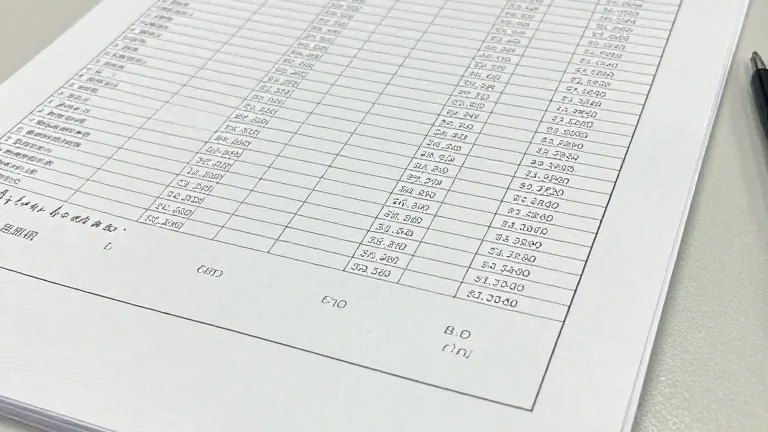
On Friday at approximately 3:30 p.m., a Department of Homeland Security agent hand-delivered a package to Denlay's office. The package included a demand letter, two declarations, and a two-page printout. Denlay described the printout as a poorly formatted Excel spreadsheet with missing and jumbled information. The letter misspelled his last name as Danlay and signed it by Eric Grant, the U.S. attorney for the eastern district of California.
The DOJ claimed the list contained 47 likely aliens unlawfully registered to vote. Denlay's review found only 46 names on the document, with one name repeated twice. That left 45 distinct names. Of those, 32 were not on the county's active voter rolls and had not received ballots. Seven names lacked enough detail to verify, such as dates of birth or full addresses. This left six potential cases that might match the federal description.
Denlay published a detailed statement on the county website explaining his refusal. He noted that California law places the burden of proof on the challenger. He argued the DOJ did not meet this standard due to the list's inaccuracy. He stated that the document lacked actionable information, such as digital files that could be cross-referenced with the county database. The physical printout had columns that cut off text, making verification difficult.
The federal letter threatened that officials who tabulated ballots for identified noncitizens risked becoming aiders and abettors to a federal crime. Denlay said he took the threat seriously but found the evidence weak. He described experiencing a rollercoaster of emotions after receiving the paperwork. He personally reviewed the records to keep his staff focused on election duties. He has received no further communication from the DOJ since Friday.
Other California counties report similar experiences. Francisco Diaz, the registrar of voters for San Benito County, said his office received a list of 33 names. He found some names were not currently registered to vote in his county. Diaz stated his office would not be rushed into compromising confidential voter data. In Orange County, the letter was initially delivered to the clerk-recorder instead of the registrar of voters, causing confusion about which office held election authority.
State and federal legal experts say the DOJ's threats aim to intimidate local officials. They argue California leaders are following the law by declining to comply without concrete proof. The DOJ has sued to stop counting ballots for 20,000 voters statewide who it claims are likely noncitizens. State officials say the federal government lacks the authority to interfere with California elections in this manner. A federal judge is currently weighing the DOJ's lawsuit.
Denlay said he wants voters to feel confident in the state's procedures. He emphasized that active voter lists meet all legal criteria for eligibility. He stated that the provided list did not come close to the extraordinary proof required to challenge a voter. He added that election officials are doing everything normally required to secure a successful election. The county will continue processing ballots according to standard protocol.
Source: The Guardian