Halloween Jokes Became St. Louis Tradition After 1938 Hooligan Crackdown
A folklorist ties the custom to Samhain rituals, while a 1938 wave of vandalism in Des Moines offers a blunter explanation for the joke-for-candy swap.
By Noor Rossi ·
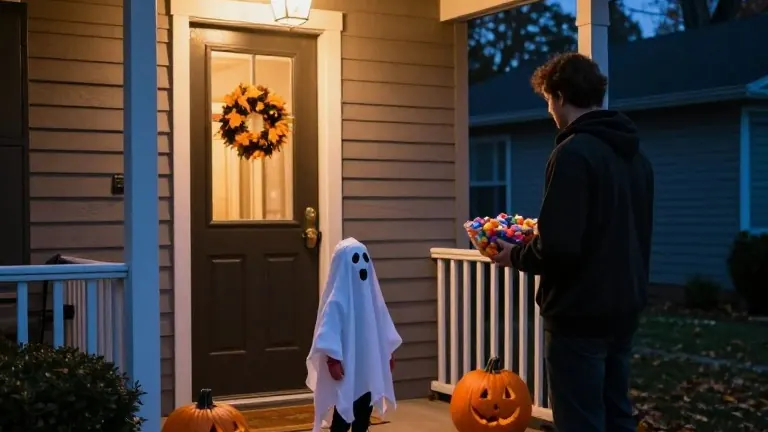
St. Louis children still trade punchlines for candy each Oct. 31.
Folklorist John Oldani, whose 2013 book St. Louis-isms examines local customs, links the practice to Irish immigrants who marked Samhain on Oct. 31, when the boundary between the living and the dead was believed to thin. Ancient Celts wore costumes to turn aside ghostly attention, he writes, and processions carried poems in exchange for food, sharing the harvest with the community. Oldani argues that sequence of costume, verse and redistribution became the modern exchange of a joke for a fun-size candy bar.
A second account points to a different motive: keeping idle hands off the streets. A 2011 NPR story described Des Moines, where police logged 550 complaints after Halloween 1938, including soaped windows, fires and broken streetlights. Officials there set Oct. 30 as Beggars Night, allowing children to knock on doors for treats only after performing a song, poem, cartwheel or joke. The story reported that the measure worked.
St. Louis records place joke-telling after the Depression, and newspapers from the era carried frequent reports of Halloween pranks by juveniles. The tradition had hardened into jokes by the 1970s. In 1971, the St. Louis Post-Dispatch told of five teenagers wearing paper bag masks who entered a bar on McPherson, kept the bartender and patrons busy with a series of jokes, took $250 from the till and left before police arrived.
Local businesses have built contests around the material. Ken Miesner's Flower Shoppe ran a competition in 2006 for the best Halloween joke, and the Post-Dispatch published entries afterward. Among them: "What is a vampire's favorite sport? Casketball" and "Where do monsters find out their fortunes? In a horror-scope."
Oldani's account and the Des Moines record describe different origins for the same door-to-door exchange. St. Louis police handled 550 complaints in Des Moines in 1938, and the joke-for-treat rule followed in that city. St. Louis newspapers reported juvenile Halloween mischief before jokes appeared, and by the 1970s the jokes had replaced the pranks.
Source: St. Louis Magazine