Palestinian blocs hold 12 to 15 Knesset seats, forcing Israeli coalition math
Polls show both major Jewish Israeli camps falling short of a governing majority, leaving the outcome to the decision of Arab voters in next week's election.
By Noor Rossi ·
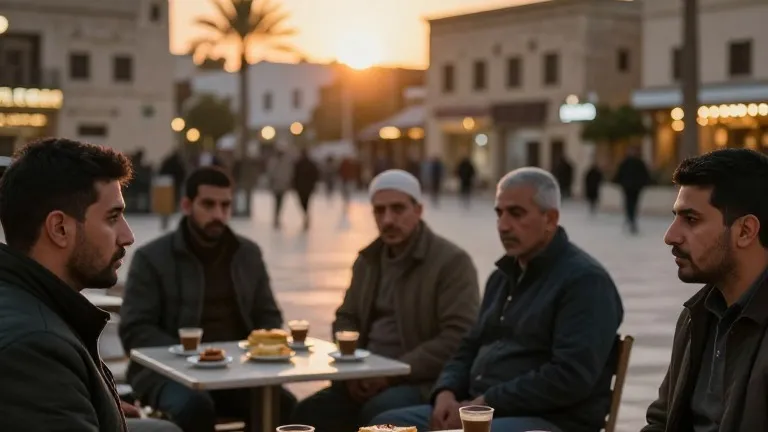
Polls published ahead of next week's Knesset election indicate that Palestinian citizens of Israel will hold between 12 and 15 of the 120 seats, a number likely to determine which party forms a government.
Current projections show Benjamin Netanyahu's far-right coalition losing its majority. The Jewish Israeli opposition bloc is also forecast to fall short of the 61 seats required to govern alone. This leaves the balance of power in the hands of the Islamist Ra'am party and the Joint List, an alliance that includes Ta'al.
Ahmad Tibi, leader of Ta'al and a Knesset member for more than two decades, stated that high turnout among the Arab community is a critical tool for removing the current government. He noted that the opposition is determined to bring the cabinet down.
Most Jewish Israeli opposition parties have ruled out a coalition with Arab politicians, while Netanyahu's camp has campaigned against such an alliance using slogans like "Bibi or Tibi." Despite these public stances, history suggests such promises can be broken. In 2021, Ra'am leader Mansour Abbas joined a coalition with Naftali Bennett, who now leads the opposition.
Voters in Kfar Qasim, where the community gathered for knafeh and cardamom coffee to hear candidates speak, face a difficult choice. Tibi described the decision as a choice between Netanyahu, Bezalel Smotrich and Itamar Ben-Gvir on one side, and the opposition on the other. He characterized the options as being between bad and worse, noting that most opposition parties oppose a two-state solution and support settlements in the West Bank.
Sami Abu Shehadeh, leader of the Balad party, identified fear as the primary motivation for voters. Citing the destruction in Gaza and rising discrimination inside Israel, he warned of the danger if the current far-right ministers return to power. Amjed Iraqi of the International Crisis Group said the vote is largely about mitigation, as a returning far-right coalition would have a renewed mandate to accelerate policies of annexation and ethnic cleansing.
The election takes place two days before Kfar Qasim marks the 1956 massacre in which border police killed 49 residents. Last month, Israel's supreme court removed Abu Shehadeh from the race over an article regarding the October 7 attacks, a ruling that drew criticism for applying different free speech standards to Jewish and Palestinian citizens.
Source: The Guardian
More Politics · World news · Report a business · Got a Story?