School Protests: 400,000 March in France as Police Deploy 70,000 Officers
The government estimates 400,000 people marched nationwide on Saturday, while interior minister Laurent Nunez reported 135 arrests following clashes in several cities.
By Noor Rossi ·
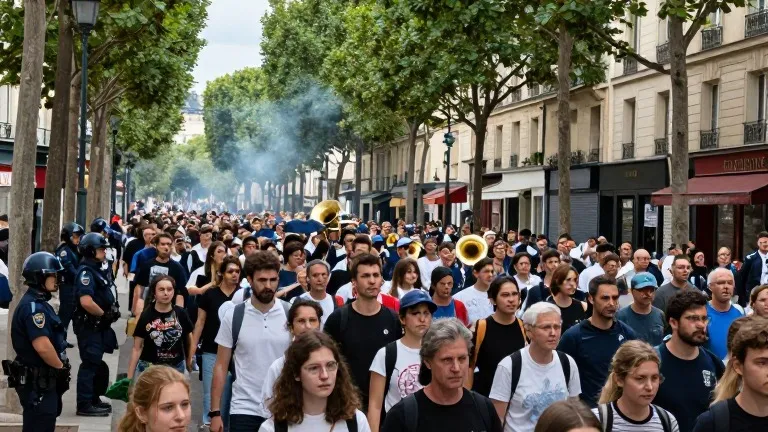
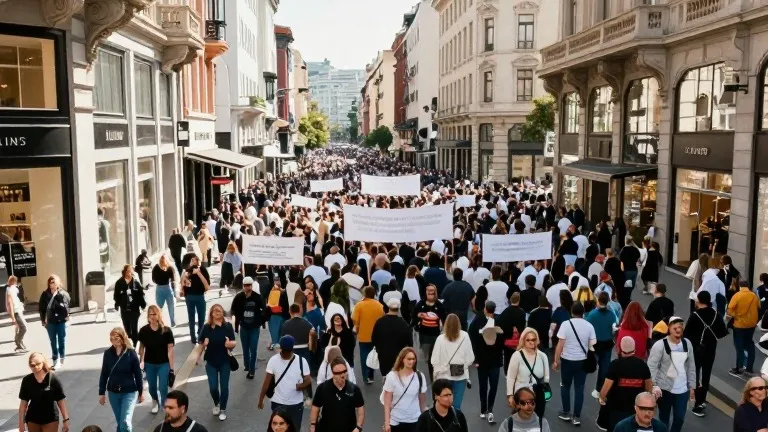
The streets of Paris filled with brass bands and families on Saturday.
At least 110,000 people marched along the eastern edge of the capital, according to government estimates. Participants supported high school students demanding more teachers and building repairs. Many also expressed frustration with high living costs and heavy-handed policing. Banners carried by marchers read "Oppression breeds rebellion" and "The right to protest." The atmosphere remained relaxed for much of the afternoon. Children and grandchildren joined the crowd as music played.
Tensions rose at the end of the route near Porte de Vincennes. Groups of masked men dressed in black, who did not appear to be part of the peaceful march, threw glass bottles and stones at police. Officers responded with teargas, water cannon, and stun grenades. A bin was set on fire, and fireworks were launched toward officers. Similar clashes occurred in Lyon, Lille, Montpellier, Nantes, and Toulouse, where teargas was used to keep protesters out of city centers. Bin fires were also lit in Marseille.
The crisis traces back to mid-September, when students aged 15 to 18 began protesting staff shortages and crumbling infrastructure. The movement has expanded to include trade unions, teachers, and parents. The government estimated that 400,000 people marched nationwide, while trade unions claimed the number was double that. More than 70,000 police officers were deployed for the event. Shops were boarded up, and many museums closed. This deployment followed a previous Saturday when France experienced significant unrest, including burned public buildings and at least 2,700 arrests.
Nadège, a 43-year-old communications worker, said she was teargassed at a peaceful demonstration the previous weekend. "I'm out again peacefully today to support everyone who is brave enough to demonstrate. It does take courage. People are afraid now," she said. "In France, it's our legal right to protest in the street and I'm here to defend that." A 21-year-old student from a blockaded Paris science faculty described the situation as an "authoritarian regime" trying to stop the democratic right to protest. Pierre, a 60-year-old retired banking consultant, marched for his eight-year-old granddaughter, citing the government's refusal to listen. Jesse, a 40-year-old charity worker, wore old clothes to prepare for potential gas or tears.
In Orléans, thousands marched against a congress held by Marine Le Pen's National Rally party. Protesters shouted slogans such as "Macron, resign. Le Pen in prison." Jérôme Rodrigues, a key figure from the 2018 and 2019 gilets jaunes movement, said the government was afraid and pushing demonstrators to the edge of the city. He stated that police shields would not solve the struggles of French people making ends meet. Rodrigues indicated that demonstrations were likely to continue each weekend.
Interior minister Laurent Nunez reported that 135 people had been arrested across France. He stated that weapons were confiscated, including metal balls, lead pellets, fireworks, slingshots, steel balls, improvised weapons, a katana sword, and airsoft weapons. Police investigations are under way after some children and protesters were injured by explosive police weaponry. Macron steps down next year, and the protests continue in his final months in office.
Source: The Guardian
More Politics · World news · Report a business · Got a Story?