25 Years Ago: The Pocket-Sized Revolution That Fit 1,000 Songs on a Card
A quarter-century ago, a $399 device with 5GB of storage fundamentally changed how people carry their music, ending the era of bulky CD players.
By Lucy Lefebvre ·
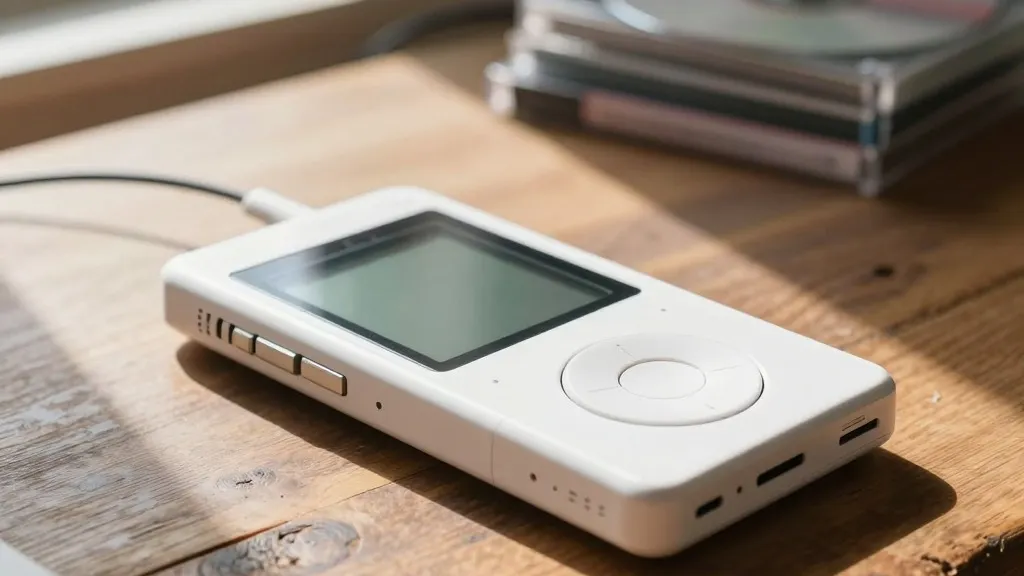
For two decades, the way people carried their favorite tracks was defined by a single, pocket-sized gadget. On October 23, 2001, Apple unveiled a device that promised to hold an entire music library in a package no larger than a deck of cards. At a price of $399, the original iPod offered 5GB of storage, which equated to roughly 1,000 MP3 songs. This milestone marks the 25th anniversary of a product that became the ultimate companion for music lovers before the smartphone era rendered dedicated players obsolete.
The launch occurred during a critical period for Apple. CEO Steve Jobs had just guided the company through a revival with the Mac OS X era, iBooks, and iMacs, helping it recover from the dot-com bubble burst. Jobs envisioned the Mac as the hub of a digital lifestyle, connecting cameras, DVD players, and portable audio. While competitors like Sony and Creative had already entered the market, Jobs argued that none had found the right formula for digital music. He identified hard disk-based players as the optimal entry point, distinguishing them from CD, MP3 CD, and flash-based alternatives.
The device’s compactness was made possible by a 1.8-inch hard drive from Toshiba, which was only 0.2 inches thick. This allowed the iPod to measure 2.4 by 4 by 0.78 inches and weigh just 6.5 ounces, making it lighter than most cell phones of the time. Despite its small size, it offered CD-quality audio and support for standard formats like MP3, WAV, and AIFF. Jobs emphasized that for most users, the 1,000-song capacity represented their entire music collection.
Performance and connectivity were central to the pitch. The iPod featured a FireWire 400 connection, which Apple marketed as the first and only music player with this technology. Jobs claimed this allowed a full CD to transfer in five to 10 seconds, compared to roughly five minutes on typical USB connections. Filling the entire device with 1,000 songs took approximately 10 minutes, a stark contrast to the five hours required for USB-based competitors. A rechargeable lithium-polymer battery provided 10 hours of playback and could recharge to 80% within an hour.
The user experience focused on minimalist design and ease of use. The device featured a scroll wheel with tactile feedback, enabling quick navigation by artist, song, or playlist with one hand. During the unveiling, Jobs demoed the device with Sarah MacLachlan’s 'Building a Mystery.' Simultaneously, Apple released iTunes 2, introducing features like MP3 CD burning and auto-sync. This auto-sync ensured that libraries curated on a Mac automatically updated to the portable player upon connection, effectively doubling as an external hard drive.
The iPod’s dominance lasted for over a decade. The first iPhone arrived in early 2007, and the two devices coexisted in Apple’s product lineup. However, the iPod’s relevance gradually declined as smartphones absorbed its functions. The final model, the 7th-generation iPod Touch, was released in May 2019. Although the product line was left unmaintained for several years, Apple officially discontinued it in May 2022, closing the chapter on a device that defined personal music for a generation.
Source: Tom's Hardware · original report published