Automated Driving Standards: Federal Regulators Propose Mandatory Cyan Lighting
The National Highway Traffic Safety Administration seeks to standardize the use of blue-green marker lamps to distinguish autonomous vehicles from human-driven cars on public roads.
By Noor Rossi ·
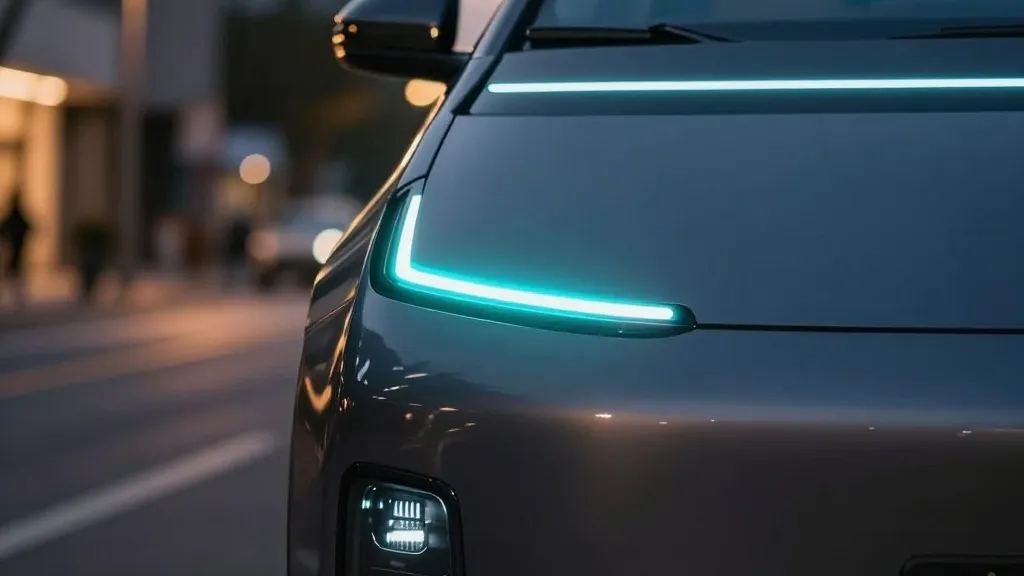
The debate over how to visually distinguish driverless vehicles from those operated by humans has persisted for years, with industry stakeholders advocating for various solutions such as flashing text displays, audio cues, or proprietary lighting schemes. On October 23, 2026, federal regulators moved to resolve this ambiguity by proposing a standardized visual signal: a distinct cyan-colored light.
The National Highway Traffic Safety Administration (NHTSA) released proposed amendments to Federal Motor Vehicle Safety Standard (FMVSS) No. 108, specifically targeting the requirements for autonomous vehicles. The core of the proposal involves the installation of cyan marker lamps. The agency argues that this specific blue-green hue fills a visual gap in the current traffic landscape, as red, amber, white, and flashing blue or red lights are already heavily utilized for brake signals, turn indicators, headlights, and emergency vehicles. By selecting cyan, NHTSA aims to provide a consistent signal that law enforcement and other road users can quickly identify as an indicator that an automated driving system is in control.
While the adoption of these lights would be optional for manufacturers, the federal government intends to establish uniform standards for their color, brightness, and placement. This regulatory approach is designed to prevent a fragmented market where different automakers use conflicting colors or signal patterns. If finalized, this standard would allow major robotaxi operators such as Waymo, Nuro, and Zoox, as well as traditional automakers including GM and Mercedes-Benz, to adopt a single, legally compliant configuration for their fleets.
There is existing precedent for the use of non-traditional lighting colors in autonomous contexts. Mercedes-Benz previously received state-level approval to use turquoise lights for its Level 3 Drive Pilot vehicles. Although the automaker has since shifted its strategy toward a Level 2++ system, the federal proposal seeks to create a nationwide baseline that supersedes individual state approvals, ensuring consistency across all jurisdictions.
Beyond adding new lighting requirements, the proposal includes the removal of several regulations that are largely irrelevant to vehicles without human drivers. NHTSA proposes eliminating mandates for physical hazard switches, manual beam shifters, and interior turn levers. Additionally, the agency is updating the 12.8-volt testing standard to accommodate modern LED architectures, reducing administrative burdens for manufacturers. The rule also considers removing stipulations regarding the vertical placement of high-beam versus low-beam lights.
This regulatory update is part of a broader administrative initiative by the Department of Transportation to streamline the deployment of autonomous vehicles. The goal is to facilitate the development of cars that lack traditional human-control interfaces, such as steering wheels and pedals, by aligning federal safety standards with the technical realities of automated driving.
Despite these efforts to modernize regulations, the enforcement of existing rules remains active. Last month, NHTSA initiated an audit query regarding the Tesla Cybercab. The investigation focuses on the technical data and processes Tesla utilized when certifying the vehicle, particularly concerning the absence of design features like sideview mirrors, pedals, and a steering wheel that are currently required under FMVSS.
The stakes for the automotive industry are significant, as the clarity of these standards will directly influence the pace of autonomous vehicle adoption. By standardizing visual cues and removing obsolete mechanical requirements, the federal government aims to reduce friction in the development process while ensuring that road users receive a uniform signal when interacting with driverless technology.
Source: The Verge · original report published