Federal agency drafts rule for blue-green lights on driverless cars
The proposal would standardize exterior lighting for autonomous vehicles and eliminate requirements for physical controls like steering wheels and pedals.
By Isabel Moretti ·
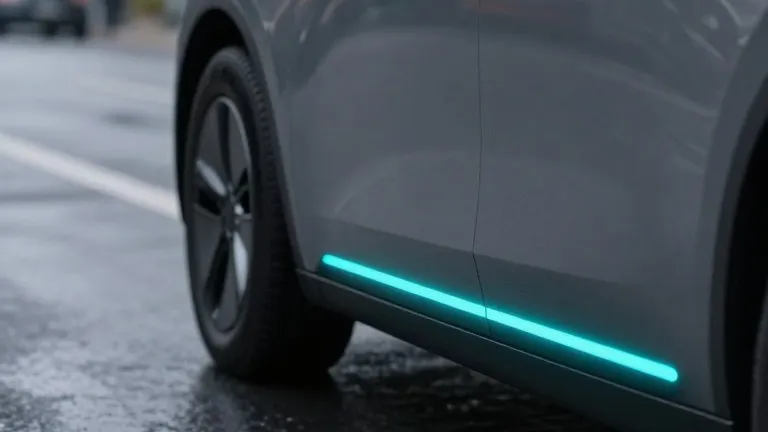
The National Highway Traffic Safety Administration has released proposed amendments to Federal Motor Vehicle Safety Standard No. 108 that would establish a national standard for cyan marker lamps on autonomous vehicles. The agency aims to create a uniform visual signal to indicate when a car is operating without a human driver.
NHTSA stated that the distinctive blue-green color would clearly and consistently signal to law enforcement and other road users when an automated driving system is active. The color was selected because it fills a visual gap in the current spectrum, which already assigns red, amber, white, and flashing blue or red lights to functions such as braking, turn signals, and emergency services. This standardization would prevent confusion caused by a patchwork of different colors and signals currently used by various manufacturers.
The proposal makes the installation of cyan lights optional for manufacturers. However, if companies choose to install them, the rule would set federal requirements for color, brightness, and placement. NHTSA wants to ensure that any autonomous fleet, including those operated by Waymo, Nuro, Zoox, GM, and Mercedes, adheres to the same legal configuration. Mercedes-Benz previously received state-level approval for turquoise lights on its Level 3 Drive Pilot vehicles, though it has since moved to a different system.
The draft also seeks to remove lighting requirements that apply to vehicles with human drivers but are irrelevant for autonomous ones. NHTSA proposes to scrap rules requiring physical hazard switches, manual beam shifters, and turn levers inside the vehicle. The agency would also update the 12.8-volt testing standard to accommodate modern LED systems and is considering dropping regulations regarding the vertical placement of high-beam lights relative to low-beam lights.
These changes align with a Department of Transportation push to accelerate the deployment of autonomous vehicles by reducing administrative hurdles for cars without traditional controls. The move follows recent scrutiny of existing models, including an audit query opened last month into the Tesla Cybercab. Regulators examined the technical data Tesla used to certify the vehicle, focusing on its lack of sideview mirrors, pedals, and a steering wheel, features currently mandated by federal standards.
The proposal is currently in the public comment phase. Manufacturers and industry groups will have an opportunity to review the text and submit feedback before the agency finalizes the rule. If adopted, the standard would provide a clear regulatory path for vehicles designed without a human driver at the wheel.
Source: The Verge