Loudoun County Housing: Amazon Scraps Data Center Project
The tech giant will convert 122 acres into homes and parks, donating 25 acres and $5 million to the county.
By Lucy Lefebvre ·
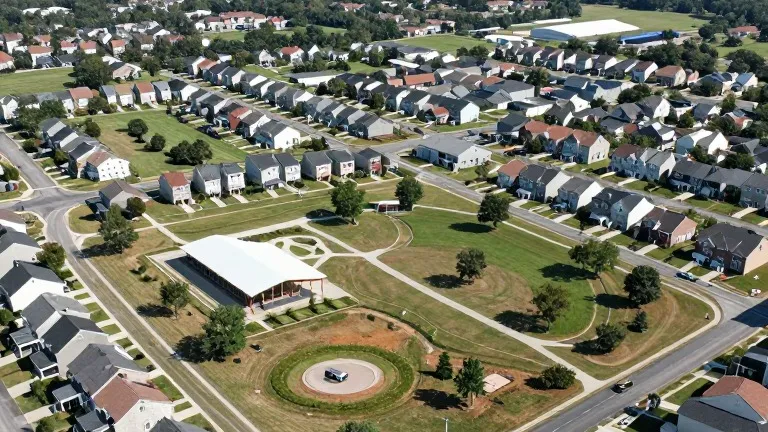
Amazon has canceled plans to build four data centers on a 122-acre site in Loudoun County, Virginia. The company will instead develop the land, formerly the George Washington University campus, into mixed-use and residential projects. This decision follows strong local opposition and new financial commitments to the county.
The site lies just outside Washington, D.C., in a region known as Data Center Alley due to its high concentration of server facilities. Residents have long expressed concerns about noise levels and the heavy electricity consumption of such infrastructure. The county’s regulatory approach to new construction has tightened in recent months, creating friction for developers seeking permits.
Amazon initially filed its proposal for the four facilities in July 2026. By September, the company had met with Phyllis J. Randall, chair of the Loudoun County Board of Supervisors. Randall suggested that Amazon might find a more suitable use for the property than data centers. That conversation led to the current agreement, which replaces the tech infrastructure with community-focused development.
Under the new terms, Amazon will donate 25 acres of the property to Loudoun County. The land will be used to build a community arts center and a new recreational facility. The company will also contribute $5 million directly to the county’s housing fund. These concessions aim to address local needs for affordable living spaces and public amenities.
Josh Weissman, Amazon’s vice president of data center development, explained the shift in strategy. He noted that while the company originally purchased the property quickly when it became available, it has since weighed the county's specific concerns. Weissman stated that the parties concluded a shared vision was a better outcome than pursuing costly litigation over the site’s legal development potential.
The national context for this decision includes rising demand for data centers driven by artificial intelligence usage. This surge has led to community pushback regarding electricity prices, water usage, and land use. President Donald Trump recently called on data center builders to pay local communities a dividend and to generate their own power, adding to the pressure on the industry.
Chair Randall described the final agreement as a result of cooperative dialogue. She emphasized that the plan provides spaces for residents to gather and play. Most importantly, she said the arrangement will help provide more attainable homes for working families in the county.
Source: Tom's Hardware