Kyiv records 140 deaths in eight months as shelter gap forces residents underground
With 140 fatalities logged in the first eight months of 2026, Kyiv’s death rate is approaching its highest level since the 2022 invasion began.
By Noor Rossi ·
Kyiv’s military administration reported that 140 people were killed in the capital between January and August 2026. This figure already exceeds the total of 172 deaths recorded for the entirety of 2025. If the current rate of loss continues, 2026 will become the deadliest year for the city since the full-scale invasion started in 2022.
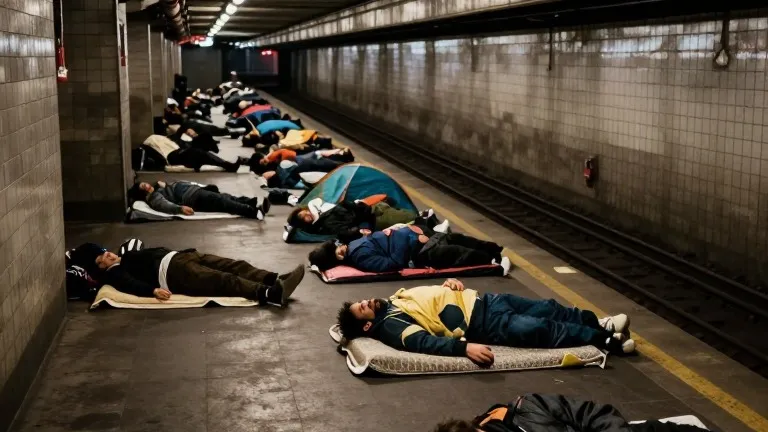
The intensification of Russian strikes has transformed the capital into a front line zone. The city’s infrastructure no longer matches the volume of its population, which stands at 4 million people. There are too few designated shelters to house everyone safely during alerts. As a result, subway stations have become improvised dormitories for thousands of residents each night.
From approximately 10 p.m. onward, people lay out mattresses and set up small tents in the metro. Children sleep beside adults, while pets rest against cold walls or next to strangers. Halyna, a resident of the Lukyanivka district, takes her 5-year-old son, Roman, to the nearest station on most evenings, even when no siren sounds. Her neighborhood has been a repeated target during the war, which has now lasted four years and eight months. "We're alive," she said. "We've been lucky once again."
The attacks have struck residential areas with lethal precision. In September, a Russian drone hit an apartment building in the central Pechersk district, killing 14-year-old Daniel Umanskyj while he did his homework. Vlad, a neighbor who was in the hallway with his daughter, said the family had been late that day, which saved their lives. He described the attackers as "sick monsters" who do not care who they kill. Flowers now mark the damaged building in Daniel’s memory.
Educational institutions have also come under fire, though the impact on daily schooling varies by location. A drone struck a school building in southwestern Kyiv in early October, but students and teachers were already in shelter. Principal Valentyna Chorna kept classes in person because the school’s shelter holds more than 500 students. Pupils in grades one through nine continue to attend in person. Attendance depends on shelter capacity and the duration of air raid alerts. If an alarm sounds in the morning while children are home, they may miss school. Parents face difficult choices when working during alerts, as even the walk to school carries risk. A drone hit the building of one Kyiv-based journalist in September, leaving the apartment undamaged while her daughter was at school.
Economic and logistical strains have compounded the crisis. Strikes on warehouses have caused supermarket shortages not seen since the early months of the war. Emergency power outages returned at the end of September, and a Russian attack paralyzed the subway system. With energy infrastructure under fire, the city faces uncertainty regarding the reliable provision of heat, electricity, and water this winter.
Despite the pressure, public opinion remains steady. The Kyiv International Institute of Sociology reported in early October that 72% of residents said in September they were ready to endure the war as long as necessary. Authorities are adjusting rules to maintain routine. The curfew now runs from 1 a.m. to 5 a.m. Some facilities may operate during yellow alerts. During red alerts, which signal ballistic or cruise missiles or large combined attacks, people must take shelter immediately.
Source: Deutsche Welle