NASA confirms new lunar landing timeline
Updated mission architectures for SpaceX and Blue Origin aim to accelerate crewed Moon landings to 2028.
By Isabel Moretti ·
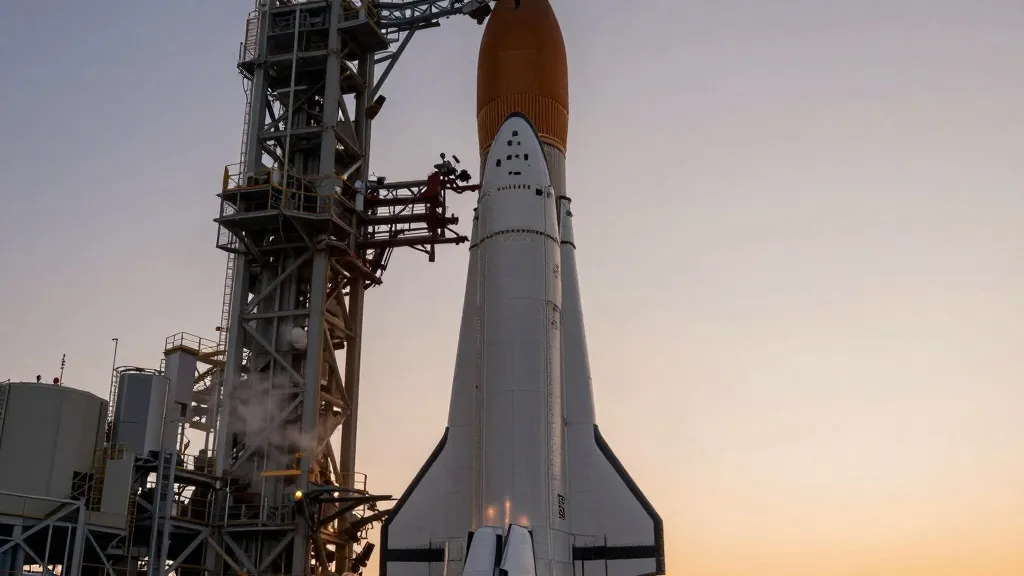
NASA officials presented a revised roadmap on Friday that confirms plans to return astronauts to the lunar surface as early as 2028. The agency detailed significant architectural changes to the Artemis program, marking the first time it has publicly outlined these specific modifications in depth. While some elements of the strategy had been previously reported, this conference provided the official confirmation of how the missions will be structured.
The most notable shift involves the docking procedures for the two primary commercial partners. For SpaceX, the updated plan requires the Orion spacecraft to dock with the Starship lunar lander in high-Earth orbit. This meeting point will occur before the combined vehicles transit to the Moon. This change represents a departure from earlier concepts that envisioned different rendezvous points.
Blue Origin’s mission architecture also underwent substantial revision. The new plan for the company involves four separate launches of the New Glenn rocket. Crucially, this configuration eliminates the need for spacecraft-to-spacecraft refuelings in deep space. The design also allows for the possibility of Blue Origin’s Blue Moon lander rendezvousing with Orion in low-Lunar orbit, providing flexibility in the final approach to the surface.
NASA Administrator Jared Isaacman expressed confidence in the agency's ability to meet these ambitious targets during the presentation. He stated that the team is on an achievable path and possesses the necessary mandate, resources, and stakeholder support to execute the plans. Isaacman emphasized the intent to move forward with the current strategy without significant delays.
The agency continues to anticipate launching the Artemis III mission by the summer of 2027. This specific mission is designed as a demonstration that involves docking with both the Blue Moon and Starship vehicles in the vicinity of Earth. It serves as a critical test of the new operational procedures before the final surface landing.
Following this demonstration, NASA is still tracking toward a 2028 launch for the Artemis IV mission. This mission will mark the actual landing of astronauts on the lunar surface. The timeline relies on the successful execution of the revised architectures presented on Friday.
The changes to the SpaceX plan were driven by engineering constraints identified in early 2026. SpaceX engineers had requested the removal of a requirement to dock with Orion in a near-rectilinear halo orbit around the Moon. This orbit required more energy and presented other technical difficulties for the Starship vehicle.
The cancellation of the Lunar Gateway earlier this year effectively resolved the orbital challenge for SpaceX. By eliminating the need for the complex halo orbit docking, the agency simplified the mission profile. This adjustment allows for a more direct approach to the lunar surface using the Starship lander.
The presentation highlights a broader effort by NASA leadership to reevaluate every element of the Artemis program. The goal is to make changes that help the lunar lander companies execute their plans more efficiently. By addressing specific technical hurdles and simplifying the mission architecture, the agency aims to accelerate the overall timeline for human exploration of the Moon.
Source: Ars Technica · original report published