Tirana Unrest Intensifies as Protesters Demand Rama's Resignation
Violent clashes in the Albanian capital left hundreds injured after a broad coalition of citizens and educators targeted government institutions.
By Lucy Lefebvre ·
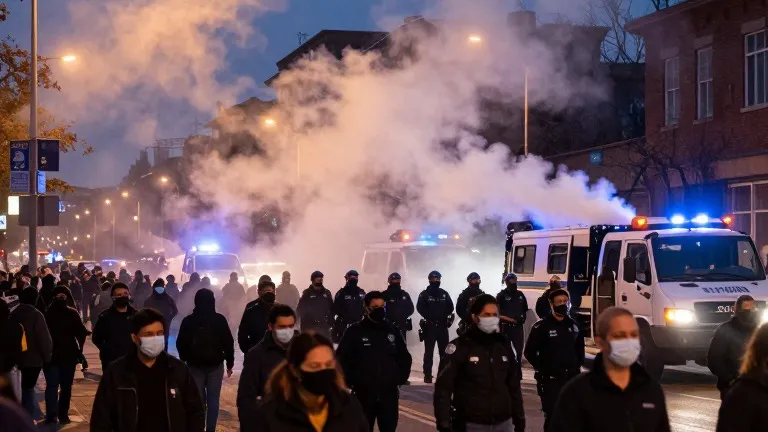
Saturday’s demonstrations in Tirana descended into chaos when law enforcement employed forceful measures to break up a massive antigovernment gathering. The confrontation resulted in significant physical harm to participants and officers alike, while several state facilities sustained damage during the standoff. This latest escalation marks a sharp increase in tension within the capital, following a period of relative calm in the preceding days.
Official figures indicate that more than 300 people, including both demonstrators and police personnel, were injured during the events. Dozens of protesters were taken into custody as security forces deployed water cannon, tear gas, and rubber bullets to manage the crowd. Organizers had called for a widespread turnout, urging students and citizens from across the nation to converge on the city center, resulting in thousands of attendees.
The unrest is part of a broader movement that gained momentum in mid-October. Initial grievances centered on deteriorating school conditions and the escalating cost of living in the small Balkan state. Since those early rallies, clashes between security forces and activists have become a recurring feature of public life, with the Ministry of Education serving as a primary target for frustration.
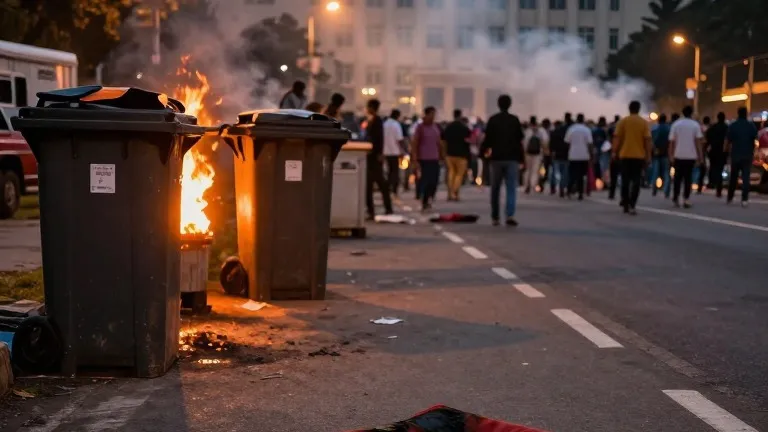
During Saturday’s rally, the focus on the education ministry was particularly intense. Parts of the crowd threw stones at the ministry building and pushed burning trash bins toward its structure. The building has become a symbolic center for the protests, reflecting the deep dissatisfaction with public services and administrative management that sparked the initial wave of demonstrations.
A diverse array of organizations committed to supporting the Saturday gathering. This coalition included university professors, various artistic communities, and members of opposition political parties. Local media outlets reported that authorities had heightened security measures around the capital, conducting vehicle checks on cars entering the city to control the flow of people and monitor the situation.
This current phase of protest builds on a timeline of public discontent that began in May. At that time, reports surfaced regarding a luxury hotel development linked to the family of U.S. President Donald Trump. That revelation fueled anger over perceived corruption, which has since expanded into a comprehensive campaign against the ruling establishment and economic pressures. The central demand of the movement is now the resignation of Prime Minister Edi Rama, a member of the Socialist Party.
Prime Minister Rama has responded by attributing the violence to external influences. He has accused specific foreign entities, including Russia and Iran, of driving online misinformation campaigns to destabilize the country. Despite these accusations, the premier has also advocated for open dialogue with the opposition and the public. In a symbolic gesture on Saturday, red cushions were placed outside the government headquarters to invite conversation, a tradition often used to represent a call for negotiation.
The symbolic gesture was short-lived, as demonstrators subsequently set the cushions ablaze, signaling their refusal to accept the current state of affairs. The protests have evolved to criticize the entire political landscape rather than just the ruling party. Signs carried by some participants targeted Rama’s main rival, centre-right leader Sali Berisha, indicating a widespread belief that the crisis is a failure of the broader political class.
The situation remains fluid as the country navigates this period of heightened civic engagement and state response. The combination of economic stress, educational concerns, and political distrust continues to drive large numbers of Albanians onto the streets. The coming days will likely determine whether the call for dialogue leads to substantive talks or if further clashes become the norm in Tirana.
Source: Al Jazeera