Voyager lander passes final shake tests for moon trip
The Griffin-1 spacecraft survived JPL's extreme temperature and vibration trials, clearing the way for a late-2026 launch with over 1,100 pounds of cargo.
By Isabel Moretti ·
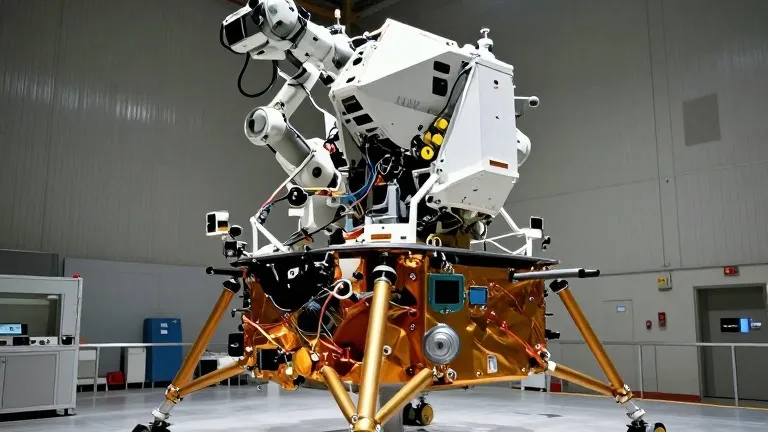
Voyager Technologies has completed the final environmental testing phase for its Griffin-1 lunar lander. The spacecraft passed a series of rigorous checks at NASA's Jet Propulsion Laboratory in Southern California, confirming it can withstand the physical stresses of a trip to the moon.
Engineers subjected the lander to extreme heat, cold, and intense vibration. They also exposed it to the loud acoustic environment it will face during launch and descent. These trials replicate the harsh conditions the vehicle will encounter between Earth and the lunar surface.
JPL confirmed the lander passed the full test sequence. An image from August 31 shows the spacecraft inside the laboratory's 25-foot-wide space simulator. The facility has tested robotic explorers since the Ranger program in the mid-1960s, which provided NASA's first close-up views of the moon.
Charles Whetsel, manager of the Exploration Systems Development Office at JPL, said the lab is proud to support this new phase of commercial lunar exploration. The Griffin-1 mission is part of NASA's Commercial Lunar Payload Services initiative.
The lander is scheduled to launch later this year. It will carry more than 1,100 pounds of cargo to a site near the lunar south pole. The payload includes science experiments and Astrolab's FLIP rover, which carries a supercomputer designed to explore the terrain.
The mission aims to test new technologies on the moon's surface. The data collected will help inform plans for a future crewed lunar base, which NASA intends to construct in the same region over the next five years.
Source: Space.com