50 Yards: The Distance Trump Says Will End Cuba's Government
The U.S. State Department has formally invited Cuban dissidents to coordinate with the CIA, a move that sharpens tensions amid new sanctions and naval posturing near the island.
By Noor Rossi ·
The diplomatic standoff between Washington and Havana reached a new level of directness this week as the United States explicitly invited Cuban citizens to collaborate with its intelligence agency. This public call for cooperation marks a significant shift in strategy, moving beyond economic pressure to include a formal request for on-the-ground partners in the effort to destabilize the current regime.
Secretary of State Marco Rubio issued the invitation in a post on X on Friday. He addressed those seeking positive change in Cuba, stating that the current moment is the time to act. Rubio highlighted the frustration caused by broken promises, corruption, and the disparity between the ruling elite and the general population. He specifically urged Cubans to seize the opportunity to create the change they desire through a discrete partnership with the CIA.
The Central Intelligence Agency quickly amplified the message by reposting Rubio’s appeal. The agency included a similar statement written in Spanish to reach a broader audience. Accompanying the text was a video that provided specific instructions on how interested individuals could make contact with the intelligence agency, signaling a structured process for engagement.
This diplomatic maneuver comes at a time of severe economic hardship for the Cuban people. The island continues to struggle under the weight of strict U.S. embargoes and sanctions designed to pressure the communist government. The cost of basic necessities has risen sharply, and access to medical care has become increasingly difficult. Reports indicate that citizens have spent hours waiting in lines for bread, while others have queued for long periods to see doctors.
The economic squeeze intensified last week when the U.S. government announced new sanctions targeting Cuba’s state-run bank. Washington cited the institution’s ties to Iran as the primary justification for the move. These additional financial measures aim to isolate the Cuban economy further and increase internal pressure on the leadership.
President Donald Trump reinforced the administration’s stance during a campaign rally in South Florida on Friday. He linked the situation in Cuba to U.S. military operations in the Middle East, specifically referencing Navy warships deployed near the Strait of Hormuz. Trump suggested that the resolution of the Cuba issue would occur during the return journey from Iran.
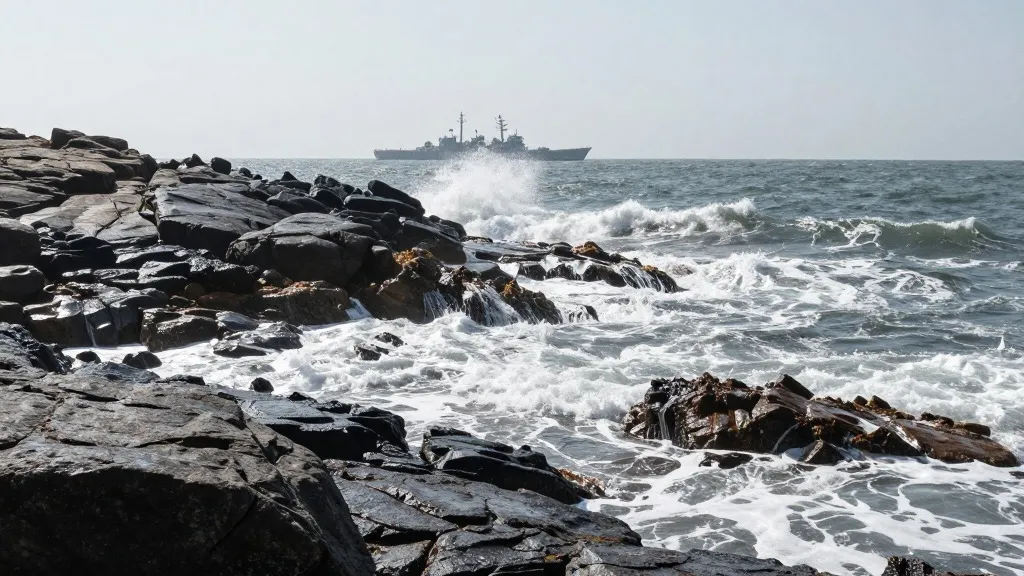
The president outlined a specific vision for how the transition might happen. He described the navy ships passing near the Cuban coast, with one vessel stopping approximately 50 yards offshore. In his account, the Cuban government would raise their hands in surrender, allowing Rubio to enter and finalize the agreement. This imagery contrasts sharply with the island’s geographic reality, as Foreign Minister Bruno Rodríguez Parrilla noted that the coastline is rugged and inhospitable to hostile arrivals.
The Cuban government responded swiftly to the new U.S. posture. Foreign Minister Rodríguez Parrilla posted on X on Friday to reject the rhetoric coming from Washington. He characterized the U.S. approach as stemming from broader ambitions toward Cuba. The foreign minister emphasized that while the island has beautiful beaches, its rugged terrain poses a challenge to those who arrive with hostile intentions and a desire for domination.
As the administration combines economic sanctions with direct intelligence recruitment and naval threats, the path forward remains unclear. The explicit invitation to partner with the CIA suggests a long-term strategy involving internal coordination rather than just external pressure. For working families in Cuba, the immediate reality remains high prices and limited services, while the political landscape becomes increasingly volatile.
Source: CBS News