Brazil Election: Lula Wins Second Round, Bolsonaro Challenges Result
Lula da Silva secured 51.78% of valid votes against Flavio Bolsonaro's 48.22%, ending a race marked by extended voting hours and a pending annulment request.
By Isabel Moretti ·
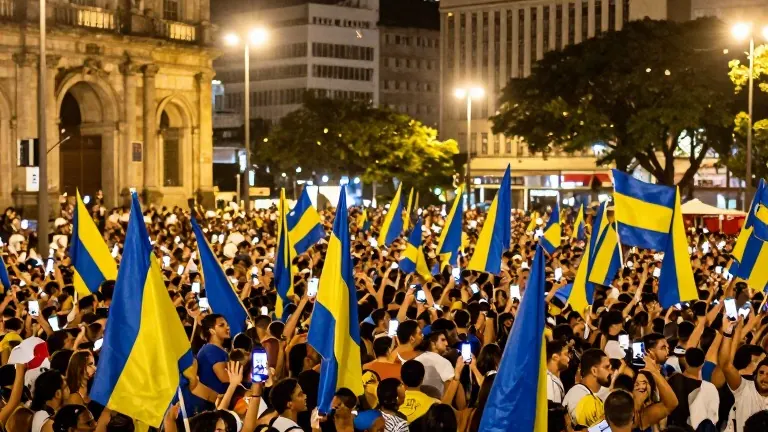
Voting in Brazil ran two hours past the scheduled 7pm close on Sunday after heavy rain and technical problems disrupted polling across the country. Luiz Inacio Lula da Silva subsequently won 51.78% of valid votes, with Senator Flavio Bolsonaro taking 48.22%, according to the Superior Electoral Court.
Bolsonaro said he would seek to void the result, citing the extended voting window. "We will engage our legal team and seek to have these elections annulled," he said. "I will not accept that the rules of the game have been arbitrarily changed, once again, by Lula's friends on the Federal Supreme Court." Reports indicated that both candidates had requested the extension because rain and transport problems kept some voters from reaching their assigned stations.
This marks Lula's fourth non-consecutive presidential term and makes him the first candidate in modern Brazilian history to lose the first round and then win the runoff. His term begins on 5 January 2027.
Lula has campaigned on closer cooperation with emerging economies and national sovereignty. During his prior presidency, he focused on poverty reduction, social spending and environmental protection. He has also been a critic of Israel and the US, supporting Palestinian statehood, while backing stronger ties with Iran and China.
In his remarks to supporters, Lula said he would "make a commitment" and "will deliver the best term any president has ever served." He added: "I will dedicate myself 24 hours a day to making this the country that everyone dreams of." On foreign influence, he said, "in this election, we defeated the interference that was coming from the outside in," and "Brazil is no one's back yard."
Mexican President Claudia Sheinbaum, US Senator Bernie Sanders, Iranian President Masoud Pezeshkian and other regional leaders have recognized the result. The runoff took place amid a shift toward conservative governments across several Latin American countries.
Source: Middle East Eye