Musk Claims Suppliers Speeding Up Terafab Chip Plant Deliveries
Elon Musk claims suppliers are speeding up deliveries for a Texas chip plant, though he admits the 2028 production target is highly ambitious.
By Noor Rossi ·
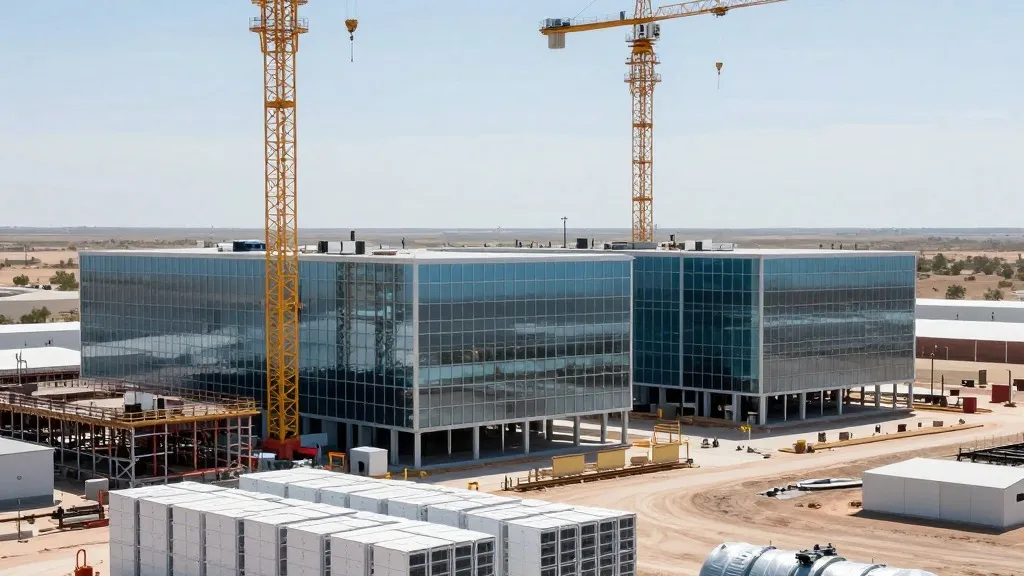
Elon Musk stated that major semiconductor equipment vendors are accelerating deliveries to support the Terafab project, a joint venture between Tesla and SpaceX. Speaking on a live broadcast of the Q3 2026 earnings call on October 20, the CEO outlined aggressive timelines for the facility located in Gibbons Creek, Texas. While targeting volume chip production by the third or fourth quarter of 2028, Musk described the schedule as highly aspirational and noted it carries significant uncertainty.
The announcement highlights a push to secure critical hardware ahead of schedule. Musk expressed gratitude to ASML and other partners for moving equipment forward to meet these goals. The primary facility aims to produce logic, memory, and advanced packaging components in a single vertically integrated site. A smaller research fab in Austin, Texas, is expected to produce an experimental test chip around the second quarter of 2027.
Intel joined the venture in April 2026 to provide its 14A manufacturing node technology. The project relies on extreme ultraviolet lithography systems, with ASML serving as the sole commercial supplier for these $400 million machines. Unofficial reports suggest the first EUV tool was slated for mid-2027, though it remains unclear if this aligns with the expedited timeline Musk described. Other suppliers include Applied Materials, Lam Research, KLA Corporation, and Tokyo Electron.
The initiative also involves negotiations with approximately ten South Korean firms. These include Hanmi Semiconductor for advanced packaging and HPSP for high-pressure hydrogen annealing equipment. The goal is to mitigate future shortfalls in cutting-edge AI processors from external foundries like TSMC. The chips will serve xAI clusters, Tesla’s autonomous vehicles, Optimus robots, and SpaceX’s orbital data centers.
Musk claimed that at full scale, Terafab’s output could rival the GDP of the top 20 global economies from a single building. For context, Switzerland, currently ranked 20th, has a GDP of roughly $1.14 trillion. The facility targets one terawatt of AI computing power per year. This figure dwarfs current global capacity, which Gartner estimates at roughly 44 gigawatts as of late 2026.
During the same broadcast, Musk detailed near-term computing goals for his AI companies. He expects 2.5 to 3 gigawatts of capacity by the end of 2026 and is confident about adding 10 gigawatts in 2027. To achieve this, SpaceX and xAI are procuring next-generation NVIDIA hardware. Plans include bringing a 440,000-GPU Vera Rubin cluster online by the end of the second quarter in 2027.
Source: Tom's Hardware · original report published
More Business · Consumer Alerts · Report a business · Got a Story?