N'nanba pushes Evanston reparations model as federal legal hurdles mount
The Justice Department has intervened in a lawsuit challenging the city's $25,000 housing grants, a move that complicates efforts to replicate the program in over 100 other communities.
By Isabel Moretti ·
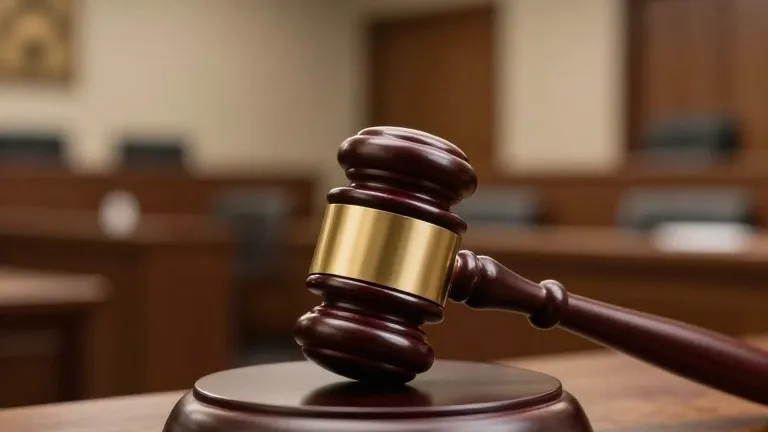
A federal judge has granted the Justice Department permission to intervene in a lawsuit challenging Evanston, Illinois' reparations program. The intervention adds a powerful federal voice to a legal battle that could determine the fate of the city's $25,000 housing grants for Black residents. This legal development arrives as the nation marks its 250th anniversary and as the Trump administration intensifies its scrutiny of race-based initiatives.
The lawsuit was initially filed by Judicial Watch. Plaintiffs argue that Evanston distributes funds based on race without identifying a specific historical harm. Michael Bekesha, the attorney representing the plaintiffs, contends that the Constitution prohibits governments from selecting beneficiaries based entirely on racial identity. The Justice Department now alleges that the program violates both the 14th Amendment's equal protection clause and the Fair Housing Act.
The federal push comes in the context of a wider administrative campaign against diversity, equity, and inclusion programs. The administration has also targeted Black history initiatives, leading some institutions to reconsider or scale back their own reparations efforts. Kiersten Pels, a Justice Department spokeswoman, stated that race-based government benefit programs are unconstitutional and frequently violate federal civil rights law.
The legal fight over Evanston follows a similar warning sent last year to leaders in Asheville and Buncombe County, North Carolina. Those communities were considering their own reparations programs when the department issued its initial caution. The current intervention in the Evanston case signals a more direct legal strategy to halt local distributions of funds.
Robin Rue Simmons, who now goes by N'nanba, helped create the Evanston program and chairs its Reparations Committee. She is currently working to spread the model to more than 100 communities across the country. Despite the federal resistance, Simmons maintains that federal redress remains the ultimate goal. She noted that while the current administration creates barriers, the collective aim remains unchanged.
The debate over reparations is also playing out on the global stage. In March, the United Nations General Assembly passed a resolution calling the trans-Atlantic slave trade the gravest crime against humanity. The resolution urged reparations and was backed by more than 120 countries. The United States, along with Argentina and Israel, voted against the measure, while 52 other nations, including the United Kingdom and 27 European Union members, abstained.
The historical scale of the issue is vast. An estimated 12.5 million Africans were forced onto ships bound for the Americas during the trans-Atlantic slave trade. Approximately 1.8 million did not survive the journey. Of the survivors, roughly 388,000 were taken to what is now the United States, where chattel slavery lasted until 1865. Scholars note that subsequent segregation and systemic racism continued to limit wealth accumulation for Black Americans.
William Darity, who co-wrote a book on reparations, observed that no president has supported comprehensive Black reparations. He noted that while President Trump has used the term, he has done so with hostility. In a September speech, Trump told supporters that reparations were an attempt to steal money and that the idea was going nowhere.
Higher education institutions are also adjusting to the new federal climate. Georgetown University continues to offer admission consideration to descendants of enslaved people connected to its history. However, Richard Cellini, who led a previous Harvard project, said new work in the sector has stalled. Harvard fired his team days after Trump's January 2025 anti-DEI order, even though the team had identified nearly 500 living descendants. A historian at the University of Virginia reported seeing no new scholarship programs since the president returned to office.
Some local programs continue to function despite the pressure. In Evanston, Joe Martin, a 46-year-old flight attendant, received a grant and commented on the gap between historical promises and current government reactions. Virginia Theological Seminary continues its annual cash payments to descendants, funded by an endowment that has grown to $2.8 million since 2019.
Source: KSAT 12
More News · Georgetown news · Report a business · Got a Story?