Station Expansion: 2007 Shuttle Flight Added Key Hub
The 2007 delivery of the Harmony module connected European and Japanese laboratories, doubling the station's interior volume.
By Lucy Lefebvre ·
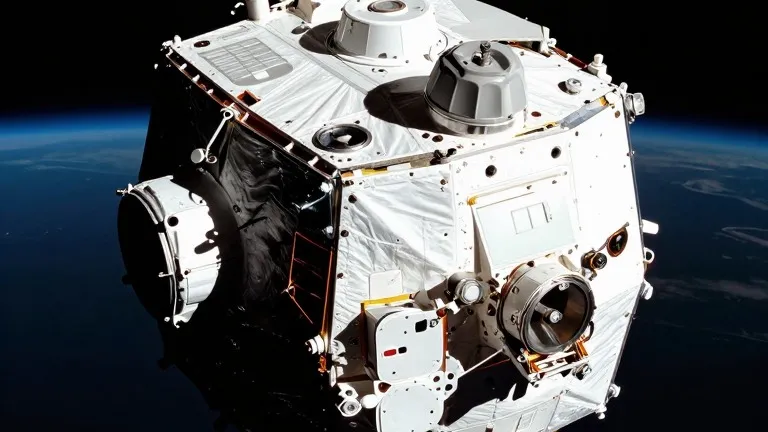
Space shuttle Discovery launched on October 23, 2007, carrying the Harmony module to the International Space Station.
The flight, designated STS-120, delivered a 14-foot-wide by 24-foot-long utility hub. This structure serves as a physical link between the European Space Agency’s Columbus module and the Japanese Kibo laboratory. It also contains the sleeping quarters for American astronauts.
Prior to this installation, the station’s most recent addition was the Russian Pirs docking module in 2001. That module has since been removed. Harmony, originally called Node 2, was built by Thales Alenia Space in Italy. It functions as the second hub for the station, following the earlier Unity node. The module features five common berthing mechanisms that act as connection points for other components.
Upon arrival, astronauts initially attached Harmony to the Unity node. After the shuttle departed, the crew used the station’s robotic arm to move the shuttle docking port on the Destiny laboratory. This maneuver cleared the path for Harmony to be permanently berthed beside Destiny. The addition increased the station’s interior volume from the size of a three-bedroom house to that of a five-bedroom house.
From its permanent position, Harmony connects the Columbus laboratory on the starboard side and the Kibo laboratory on the port side. Some of its ports have hosted visiting cargo ships, while a docking port on its roof allows other vehicles to park. Inside, the module holds eight payload racks. Four racks house avionics, and the remaining four provide storage or crew living space.
The name Harmony was selected through a public contest run by NASA. The two-week mission marked a new phase in station growth by providing the necessary infrastructure for future module integration.
Source: Space.com