Syrian Protests Surge After Deadly Military Incursion in the South
Nationwide rallies erupted in Syria following the death of a disabled man during recent Israeli military operations in the southern border regions.
By Isabel Moretti ·
A sharp tension has emerged along the southern border of Syria, where public frustration has boiled over into widespread demonstrations. The immediate catalyst for this surge in civic activity was a recent military operation that resulted in the death of a man with a disability. This specific incident has served as a focal point for broader grievances regarding repeated incursions into Syrian territory by Israeli forces. The conflict between local communities seeking security and the presence of foreign military assets has now reached a visible peak in the streets.
State media reports confirm that significant crowds gathered on Friday in two major urban centers. In the capital, Damascus, and in the central city of Homs, citizens assembled to voice their discontent. The rallies specifically targeted the southern provinces of Quneitra and Daraa. These areas have been the primary sites of recent friction. The scale of the participation suggests a coordinated or strongly felt national response to events that occurred just days prior.
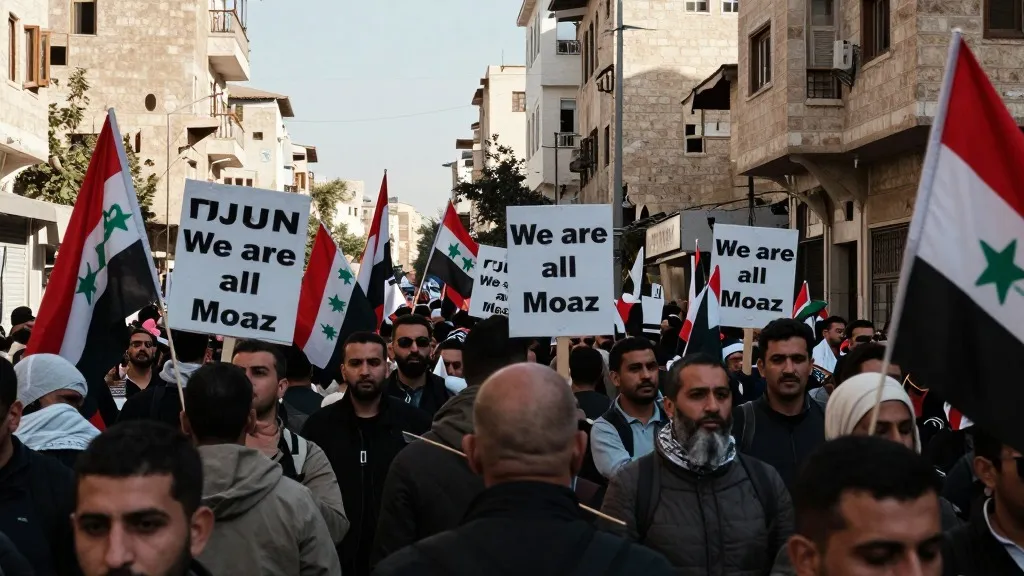
In the city of Daraa, an AFP correspondent observed hundreds of individuals participating in the gathering. Many were seen waving Syrian flags, a visual symbol of national unity during the protest. Taysir al-Hariri, a local protester, articulated the collective sentiment to the news agency. He stated that the demonstrators aimed to "send a message to the world" that the country remains united. He emphasized that this solidarity is directed "against Israeli incursions and against anyone who is tempted to tamper with national security."
Visual evidence from state television broadcasts highlighted the personal nature of the loss. Marchers carried posters with the slogan "We are all Moaz." This phrase directly references the man with special needs who was killed by fire during an incursion in Daraa province. The identification of the victim with the community through this slogan has turned his death into a symbolic cause for the wider population. The imagery served to humanize the statistical impact of the military actions for the general public.
In a separate but related scene in Damascus, the family of another Syrian man who was seized by Israeli forces gathered outside a United Nations building. They publicly called for his release. The presence of children holding posters that read "I want my dad" added an emotional weight to the diplomatic and military dispute. This demonstration underscores that the impact of the incursions extends beyond territorial control to the immediate families of those detained or displaced.
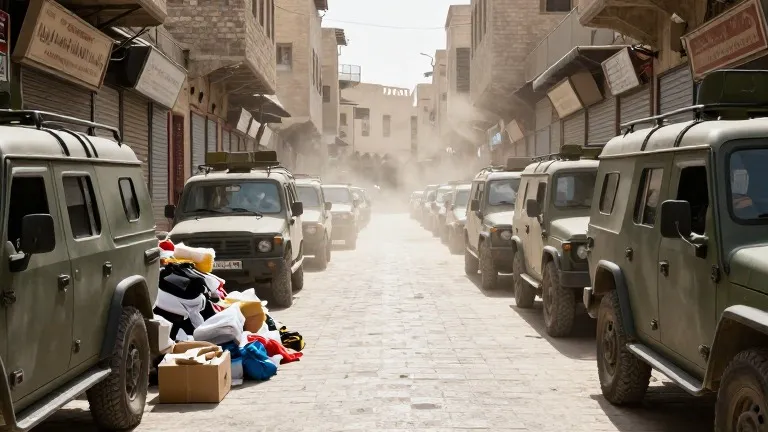
Military activities on the ground have intensified in parallel with these public displays. State media reported on Friday that Israeli forces advanced into a portion of Quneitra province. Several roads were blocked during this movement. In the affected areas, troops have engaged in physical alterations to the landscape. They have bulldozed olive groves, a significant economic resource for local farmers. Additionally, checkpoints have been established, and residents have been detained, indicating a sustained operational presence rather than a brief passage.
This current phase of conflict follows a significant shift in the regional power dynamics. Since a new government took power in December 2024, after the ousting of longtime ruler Bashar al-Assad, the Israeli military has conducted hundreds of strikes in Syria. Frequent incursions have become a regular feature of the border landscape. The military also deployed troops into a buffer zone that has been patrolled by the United Nations since 1974. This zone had historically separated the two armies on the Golan Heights, which is mainly occupied by Israel.
The long-term strategic goal of the Israeli military presence is now clearly defined. Officials have vowed to maintain troops in a designated security zone in southern Syria. The stated objective is to create a broader demilitarized area. This approach suggests that the incursions are not merely tactical responses but part of a structural effort to reshape the security architecture of the region. For working families and residents in the south, this means navigating a new normal where the border is fluid and military activity is a constant background reality.
Source: Middle East Eye