White House Strategy: Trump Aides Prepare for Post-Netanyahu Israel
Internal officials are drafting plans to cooperate with Israel's opposition bloc as polls show a 54-seat lead ahead of the October 27 vote.
By Lucy Lefebvre ·

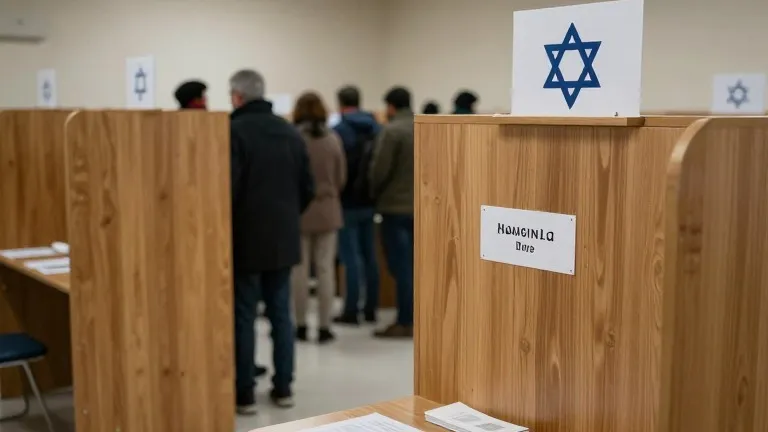
Tensions within the Trump administration over Israeli policy have intensified as Prime Minister Benjamin Netanyahu's electoral position weakens. US officials told Axios that senior advisers are optimistic about the prospect of working with Netanyahu's political rivals if the incumbent loses the upcoming election scheduled for October 27. This internal shift marks a departure from the unified front presented to the public, revealing a split over how Washington should engage with Israel's next government.
The latest Maariv poll indicates a substantial swing away from the prime minister's camp. The opposition bloc now holds a lead of 54 seats, while Netanyahu's coalition has fallen to 48. This narrowing gap has prompted the White House to draft contingency strategies. One senior Trump adviser characterized the current political reality to Axios with the blunt assessment that Netanyahu is the devil the president knows.
Dissatisfaction with the president's endorsement of Netanyahu is not new within the inner circle. Many of the closest advisers opposed the decision to back the prime minister, arguing that the United States should remain neutral in the Israeli race. Vice President JD Vance echoed this reluctance this week when pressed by reporters. He stated that he is neither attacking nor endorsing Netanyahu, but noted that the president's support is the decisive factor.
Strains in the administration extend beyond electoral preferences to specific policy disagreements. Tom Barrack, the US Ambassador to Turkey, voiced strong objections to the Netanyahu government's military operations in Syria. Following Israeli strikes on a base in the Idlib province, Barrack described the action as an unnecessary escalation that failed to advance regional stability. His criticism highlights a growing rift between the diplomatic corps and the Israeli leadership on tactical matters.
Secretary of State Marco Rubio and his team maintain a closer relationship with the prime minister but have identified areas for improvement. They believe Israel should do more to strengthen Lebanon's government. Additionally, the State Department has expressed frustration regarding what they view as a failure by Netanyahu to curb settler attacks on Palestinians in the West Bank. These specific grievances suggest that even supporters of the current prime minister within the cabinet are demanding tangible results.
The polling data also reveals voter preferences for government formation. If the election does not produce a clear majority, 60 percent of respondents prefer a unity government over another election. Among those favoring unity, 33 percent want a leader from the opposition bloc, while only 19 percent support Netanyahu. In a direct head-to-head comparison for the prime ministership, Gadi Eisenkot leads Netanyahu with 49 percent support against 41 percent for the incumbent.
Source: The Jerusalem Post