12 Years After Completion, New Yalu Bridge Opens to Leaders
North Korea's leader crossed the newly finished link to China, signaling a push for closer economic ties and broader cooperation between the two neighbors.
By Noor Rossi ·
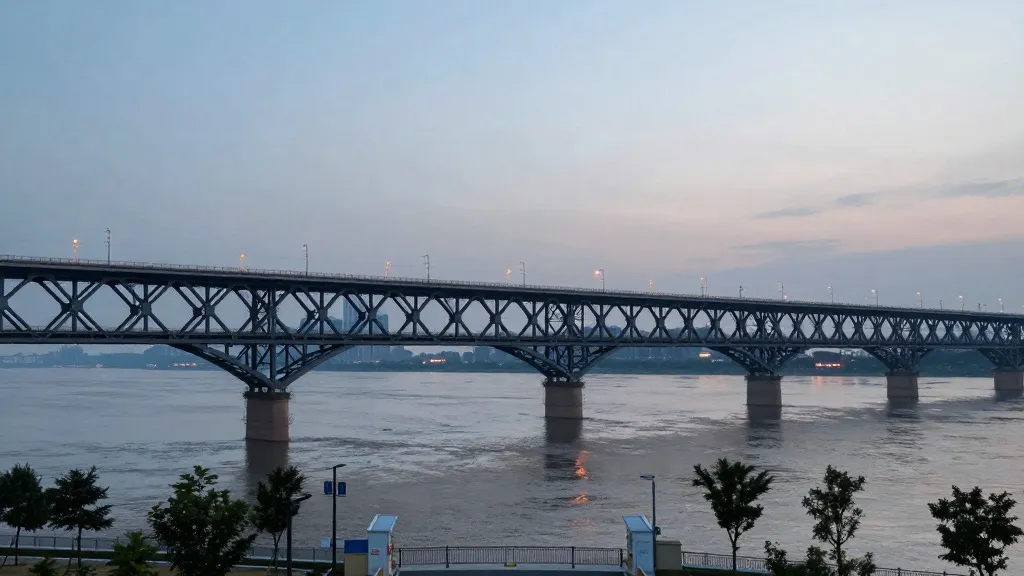
Residents in the border city of Dandong noticed significant changes in their daily routines this week as traffic controls tightened around the New Yalu River Bridge. Local hotel bookings were restricted, and security measures increased near a museum dedicated to China's role in the Korean War. These logistical adjustments, reported by Japan's Kyodo news agency, signaled the arrival of a senior North Korean official and highlighted the heightened attention surrounding the region's cross-border infrastructure.
The centerpiece of this activity was the inauguration of the new bridge by North Korean leader Kim Jong-un. According to South Korea's unification ministry and China's Xinhua news agency, Kim crossed the structure on Saturday to meet with Wang Huning, a member of the standing committee of China's Communist Party. The two officials toured a local car factory and pledged to strengthen the relationship between their nations. Kim stated that North Korea is ready to expand practical cooperation with China to provide tangible benefits to both populations.
The timing of this visit appears strategic, falling just days before the 25 October anniversary of China's first major victory in the Korean War. That historical event occurred in October 1950, shortly after Chinese troops entered North Korea. By marking this date with a high-profile trip, Beijing and Pyongyang seem to be emphasizing the enduring nature of their alliance. Wang accompanied Kim to the bridge to see him off, further underscoring the diplomatic weight of the occasion.
The bridge itself is a 3km structure that finally opened in mid-October. Its completion marks the end of a 12-year wait since China finished construction, with delays previously attributed to the North Korean side. This opening is significant because it links Pyongyang by road to its two primary backers. In early September, North Korea and Russia opened the first road bridge across their short border, meaning the North Korean capital now has direct road connections to both Moscow and Beijing.
This is Kim's sixth trip to China and his first since September 2025. At that time, he attended a military parade in Beijing alongside Chinese President Xi Jinping and Russian President Vladimir Putin. Relations have been active in both directions, as Xi visited Pyongyang in June, marking his first trip there in seven years. These exchanges suggest a period of renewed engagement between the three leaders.
Despite the warming relations with the north, ties with South Korea have cooled. Kim's sister, Kim Yo Jong, has issued approximately ten statements criticizing Seoul since late September. South Korea's unification ministry has described this frequency of commentary as unusual. She has also announced plans to resume loudspeaker broadcasts at the border within days, a move that typically signals tension.
Looking ahead, speculation continues about potential high-level meetings at the Asia Pacific Economic Cooperation summit in Shenzhen, scheduled for 18 to 19 November. Some observers have wondered if this could lead to a meeting between Kim and US President Donald Trump. However, US and South Korean officials told Reuters on Friday that they see little chance of such a meeting taking place this year.
Source: The Guardian