Tennessee execution team faces sharp criticism after Christa Pike survives lethal injection
Medical specialists are questioning the procedural competence of the staff involved in the failed attempt to execute Pike last month.
By Noor Rossi ·
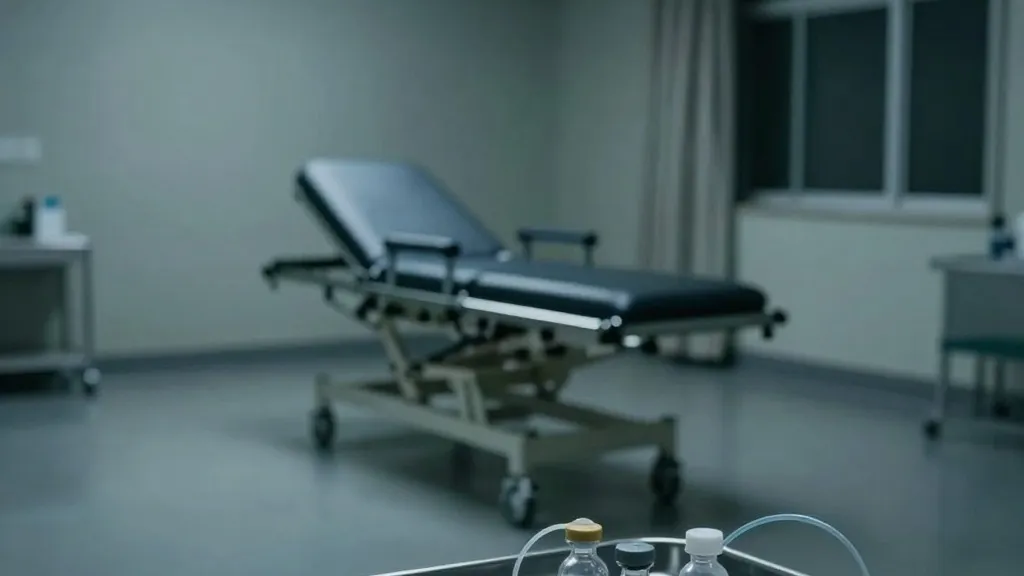
A high-profile legal dispute over a failed execution in Tennessee has drawn immediate scrutiny from medical professionals who say the procedure was handled with unusual lack of care.
Experts in surgery and anesthesiology have raised concerns about the specific actions taken by the state’s execution team during the attempt to put Christa Pike to death on September 30. They argue that the sequence of events described in recent court filings would likely be classified as medical malpractice in a standard hospital setting. The criticism centers on the team’s inability to establish a reliable intravenous line before administering a sedative dose that is typically lethal.
New details provided by Pike’s attorney, Randy Spivey, outline a chaotic hour-long struggle inside the death chamber. The account states that four unidentified members of the IV team used approximately ten needles in an effort to access Pike’s veins. At various points, the team expressed concern that her veins might have ruptured. Spivey’s chronology notes that Pike grimaced and stated her arm was really burning, a symptom that experts say should have triggered an immediate pause in the infusion according to standard drug labeling.
Jonathan Groner, an emeritus professor of clinical surgery at Ohio State University, described the scene as one where no clear leadership or plan was evident. He called the level of incompetence difficult to comprehend. Groner noted that the team attempted to use ultrasound to locate a vein, a technique that typically requires extensive specialist training and significant practice to perform smoothly. He observed that the team appeared unfamiliar with the equipment.
Specific technical errors were highlighted by Joel Zivot, a professor of anesthesiology and surgery who provided expert testimony. Zivot pointed out that the team switched to a 24-gauge needle, a size often used for infants, while trying to push a large volume of pentobarbital. He stated there was no way to administer the required dosage through such a small catheter without risking vein rupture. The timeline shows a team member noting that the vein likely had blown at 7:07 pm, yet the procedure continued.
Despite warnings from Pike’s legal team about her small and compromised veins, the state proceeded with the execution. Zivot identified several systemic failures, including a poorly written protocol and the use of technology the team may not have been authorized to operate. He emphasized that the team continued when safety standards suggested they should have stopped, noting that medicine is focused on accountability and training, neither of which was visible in that room.
The incident has broader implications for the practice of lethal injection in the United States. Groner described the method as a medical charade, arguing that the ultimate penalty should be death and not a prolonged process that risks causing pain. The case has prompted Tennessee to pause all executions while a review is conducted, sparking a national conversation about the reliability and ethics of the death penalty.
Pike, who was sentenced to death for a 1995 murder, spent ten days in a hospital following the event. She was initially placed on a ventilator, and her lawyers had assumed she was brain-dead. She has since returned to her prison cell and can now walk and talk, though her long-term health outlook remains uncertain. The state’s decision to halt future executions signals a period of reckoning for the practice.
Source: The Guardian