Russian Aid Supercharges North Korean Missile Threat
A deepening military exchange between Moscow and Pyongyang has enabled Pyongyang to upgrade its ballistic systems and launch mass drone production.
By Isabel Moretti ·
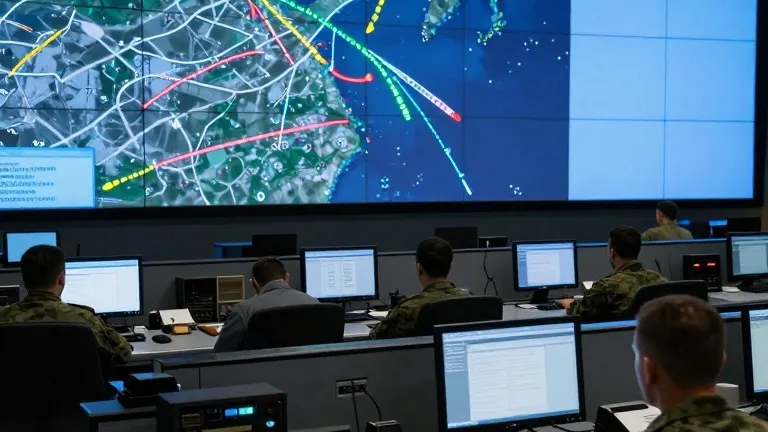
The strategic balance in East Asia is shifting as North Korea accelerates the modernization of its military hardware. This surge in capability is not happening in isolation but is the direct result of a deepening partnership with Russia. The two nations are engaged in a complex exchange where Moscow provides advanced military technology and data, while Pyongyang supplies soldiers, workers, and weapons. This cooperation has moved beyond traditional diplomatic ties to become a critical component of both countries' defense strategies.
The tangible evidence of this progress appeared in early October. North Korea conducted a test of a tactical ballistic missile that officials claim is capable of carrying a nuclear warhead. Estimates from South Korea and Japan place the missile's range at approximately 700 kilometers. In contrast, Pyongyang asserted that the weapon traveled 1,000 kilometers. This discrepancy highlights the ongoing tension over the true reach of the new system, but the consensus is that the missile represents a significant step forward in the country's offensive capabilities.
South Korea's response to this test marked a departure from previous patterns. Historically, Seoul has responded to such provocations with brief, diplomatic statements. However, five days after the North's launch, the South conducted its own first test of a hypersonic ballistic missile. President Lee Jae Myung personally observed the event. Analysts interpret this rapid and robust response as a sign that Seoul is growing increasingly concerned about the speed at which North Korea is advancing its missile technology.
A key driver of this advancement is the transfer of Russian deployment data and feedback. Anton Ponomarenko, an analyst, noted that this access has allowed North Korea to refine the accuracy and maneuverability of its weapons. He described the resulting threat to South Korea as more substantial. The exchange of technical knowledge is allowing Pyongyang to fix past design flaws and optimize its platforms for future combat scenarios.
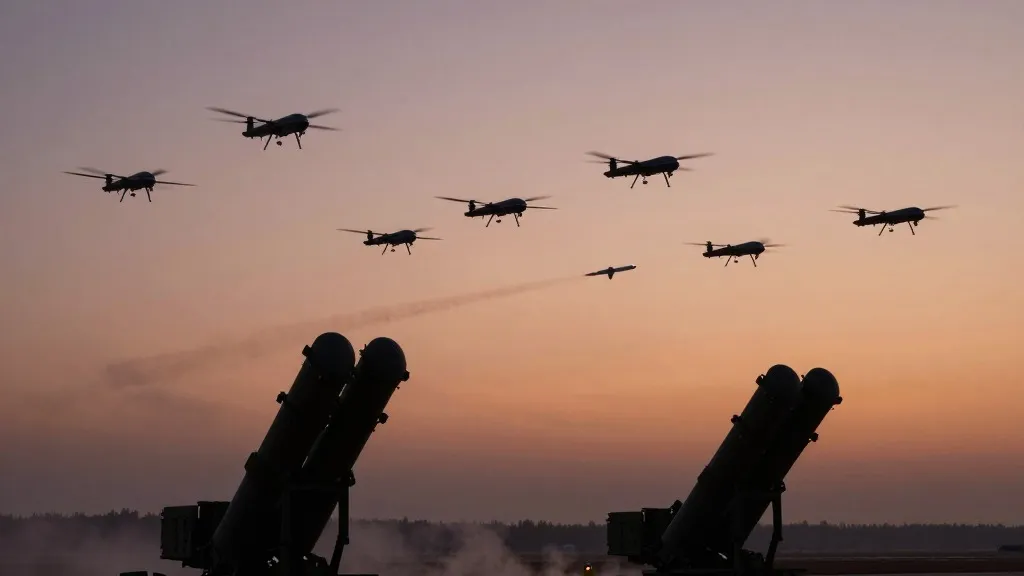
The partnership also extends to unmanned systems. Russia has assisted North Korea in building its own drone capabilities and scaling up production to mass levels. This focus on drones is informed by observations from the conflicts in Ukraine and the Middle East. In those theaters, inexpensive drones have proven capable of overwhelming expensive air defense networks. North Korea has taken note of this tactical shift and is now prioritizing the development of similar low-cost, high-volume aerial assets.
Recent military drills illustrate how these new capabilities are being integrated. Last month, North Korean forces staged an exercise in which a swarm of drones attacked a target island. Simultaneously, cruise and ballistic missiles struck the same target from different directions. This coordinated attack demonstrates a new level of tactical sophistication. It suggests that North Korea is preparing for multi-vector assaults that will be difficult to defend against with current systems.
The implications for regional defense spending are significant. The evolving tactics employed by North Korea will likely force South Korea and its allies to redesign their air defense architectures. This will come at considerable cost, as new systems are required to track and intercept both high-speed missiles and large swarms of low-cost drones. The financial burden of maintaining these upgraded defenses adds to the economic pressures faced by the region.
This report aligns with other recent accounts of the Russian North Korean partnership. In September, Bloomberg reported that Russia is utilizing North Korean citizens to manufacture military drones. Facilities in Alabuga, Tatarstan, are cited as key production hubs. Estimates suggest that up to 25,000 North Koreans are currently working at Russian military plants. This labor force is crucial for meeting the production demands of the ongoing conflict in Ukraine.
Deployment activities are also intensifying. A North Korean missile unit has begun positioning itself in western Russia. This unit could be equipped with 120 ballistic missiles and six launchers, potentially targeting Ukraine. Earlier in August, Russia reportedly requested KN-30 ballistic missiles from Pyongyang. Additionally, North Korea announced tests of a modernized 240mm multiple-launch rocket system, a tactical ballistic missile, and a 155mm long-range artillery shell in June 2026. These developments confirm a sustained and expanding military collaboration.
Source: Ukrainska Pravda