Taiz water market: 75% price surge amid Houthi blockade
Fuel shortages and blocked supply routes are driving up the cost of essential goods for one million residents in Yemen's third-largest city.
By Noor Rossi ·
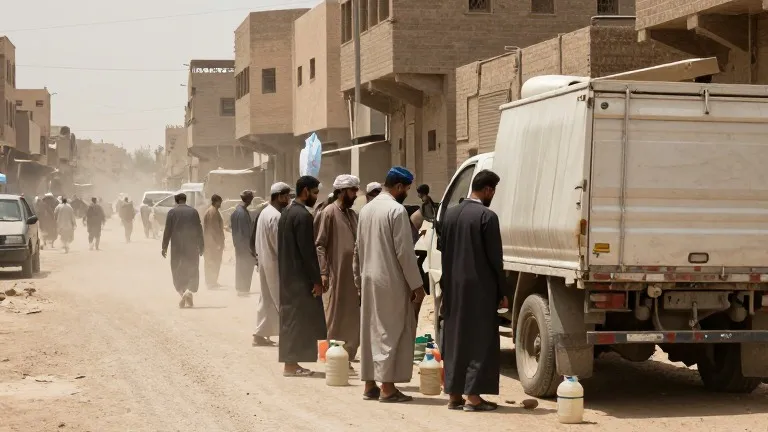
The cost of bottled water in Taiz has risen by as much as 75% in recent weeks, according to local families and aid groups. This spike in consumer prices follows the escalation of the siege by Iran-backed Houthi rebels, which has disrupted the logistics network that supplies the city. The price increase places a heavy financial burden on households that are already managing reduced incomes and rising costs for other essentials.
The market disruption stems from a combination of restricted access to wells and a shortage of fuel for desalination plants. Water trucks, which previously served as a reliable delivery method, are largely blocked from entering the city. Truckers who attempt the route often triple their rates due to the danger involved. The water utility and desalination facilities are operating below capacity as fuel reserves dwindle, further constraining the supply side of the equation.
Hadil al-Shahid, a salon owner in Taiz, said her household previously consumed about 10 liters of bottled water per day. She now stretches that same amount to last four days. Her family has stopped buying coffee and tea to conserve their limited water supply. Al-Shahid noted that some neighbors are purchasing water on credit to manage their cash flow.
The economic pressure extends beyond the water sector. Grocery prices have climbed due to shortages, with flour and rice costing about 50% more than they did in the summer. Cooking gas prices have more than quadrupled, according to Hani Bafaqih of the aid group CARE. Many families are switching to wood, charcoal, or cardboard for heating and cooking as fuel becomes scarce.
The city of Taiz is home to more than 1 million people. Since August, the province has absorbed an estimated 124,000 displaced persons from other parts of Yemen, according to United Nations migration experts. Jens Laerke, a spokesperson for a UN emergency aid division, reported that some of these displaced families survive on one meal a day in makeshift shelters.
The Houthi advance accelerated after the group captured the port city of Mokha last month. Mokha is located about 130 kilometers from Taiz and is vital for controlling Red Sea shipping. As the rebels took control of more land and roads surrounding Taiz, residents lost access to nearby water sources. Three Houthi officials told The Associated Press that the group controls about 80% of the surrounding countryside and several neighborhoods within the city.
The squeeze on resources has affected public health services. Fuel shortages have hampered community kitchens and shut down waste collection systems. Laerke warned that disease, including cholera, becomes more likely as families use unprotected wells. The shortages create a cycle where lack of fuel limits sanitation, which in turn increases health risks for the population.
Ahmed Abdel Gaber, who is displaced with nine relatives, said his income from hauling construction material is no longer steady. His family now relies heavily on assistance and donations for food. Al-Shahid closed her hair salon as customers prioritized spending on food and water over personal services. Her children now eat mostly rice, bread, and cheese.
The government still holds the center of Taiz, but the siege complicates resupplying its forces. Analysts view controlling the city as a key step for the Houthis if they wish to push south toward Aden and Lahj. Ahmed Nagi of the International Crisis Group said any attempt to seize parts of the city would likely result in a prolonged and costly battle. Foreign Minister Afrah al-Zouba has acknowledged the tightening grip of the rebels.
Civilians face direct risks from the conflict. Earlier this week, Houthi missiles hit a residential area in Taiz, killing two teenage girls. Abdel Gaber reported hearing explosions daily from fighting about 5 kilometers away. Al-Shahid said she cannot afford to leave the city. She stated that staying in their home is inevitable, whether it be a matter of life or death.
Source: NPR
More Business · World news · Consumer Alerts · Report a business · Got a Story?