Pakistan Completes Mecca Pact Ratification Amid Regional Tensions
Islamabad has finalized its legal commitment to the tripartite security deal just as Saudi Arabia braces for further Houthi strikes and regional powers prepare for potential conflict.
By Isabel Moretti ·
Resident households in southwestern Saudi Arabia received fresh alerts this week to stay alert and avoid public gatherings, a precautionary measure that signals the immediate relevance of a new security framework for the region. These warnings followed recent missile and drone strikes on the kingdom, highlighting the urgent need for coordinated defense capabilities among its allies. The timing underscores how quickly geopolitical shifts can impact daily life in border areas.
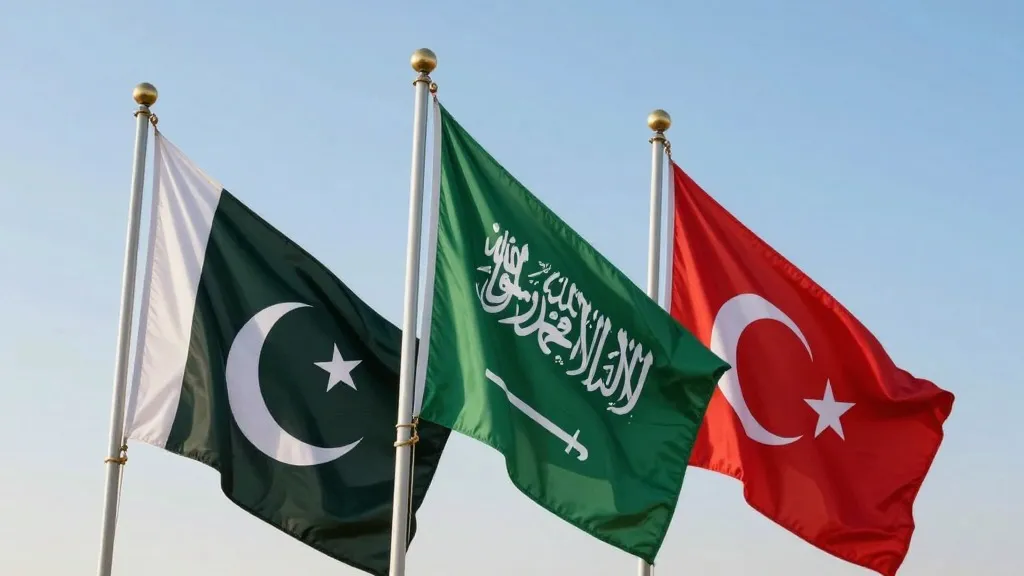
Pakistan’s Foreign Office announced on Friday that Islamabad has officially ratified the Mecca Joint Defence Agreement. This move completes the domestic legal requirements for two of the three signatories, bringing the pact closer to full operational status. The agreement was originally signed on 7 August by leaders from Pakistan, Turkey, and Saudi Arabia, establishing a formal mechanism for mutual protection.
Sajjad Haider Khan, the spokesperson for Pakistan’s Foreign Office, confirmed that both Islamabad and Riyadh have finished their internal ratification processes. He noted that discussions regarding the specific operational details of the pact are ongoing among the three nations. However, the agreement is not yet fully active because Turkey is still navigating its own domestic approval procedures, meaning all three parties have not yet given final legal consent.
The core principle of the Mecca Agreement is collective defense against external armed aggression. If any of the three states faces an outside attack, the other members will provide support. The exact nature and scale of that assistance will depend on the specific circumstances of the crisis. Pakistan has characterized the deal as strictly defensive, aligning it with the principles of the United Nations Charter to reassure international partners.
Implementation efforts accelerated following a meeting on 5 October by the Strategic Political and Defence Committee of the three countries. Delegates from Pakistan, Turkey, and Saudi Arabia met to discuss how to execute the collective defense commitments. They agreed to deploy military forces and capabilities rapidly to Saudi Arabia if needed, while ensuring that each nation adheres to its own domestic laws during such operations.
This diplomatic progress occurs against a backdrop of rising regional anxiety. Saudi Civil Defence authorities issued warnings this week for areas including Abha and Khamis Mushait in the southwest. While officials later stated that the immediate danger had passed, they did not specify the exact nature of the threat. Residents were advised to follow safety protocols and refrain from gathering or filming in the affected zones, according to reports from Anadolu Agency.
The alerts arrived concurrently with sustained Houthi missile and drone attacks on Saudi territory. Recent reporting indicates that Riyadh’s allies have primarily offered defensive support to help the kingdom protect its critical infrastructure from further strikes. This ongoing pressure on Saudi defenses serves as a practical test case for the type of coordination envisioned in the new defense pact.
Regional dynamics are further complicated by military preparations in Israel. The Israeli military announced large-scale exercises scheduled for Sunday and Monday, involving air force units and forces from the Northern and Central Commands. These drills will rehearse scenarios of surprise air and land attacks, as well as infiltration tactics. The goal is to test readiness for defending against multi-front threats and to prepare for potential escalation along Israel’s borders.
These military preparations align with reports that Washington and Tel Aviv are weighing renewed military action against Iran. President Trump stated on Friday that the United States might launch another operation against Iran as the current conflict approaches its eighth month. A report from The Business Times, citing US officials, indicated that American and Israeli forces have drafted plans for fresh strikes following the US midterm elections on 3 November. Potential targets include Iranian energy infrastructure, nuclear facilities, and its missile and drone capabilities.
Source: Middle East Eye