Trump Holds 25 Rallies in October as Midterm Campaign Winds Down
The president is spending his final pre-election days in a marathon of appearances, recently canceling and rescheduling stops in Iowa and Kansas within 24 hours.
By Lucy Lefebvre ·
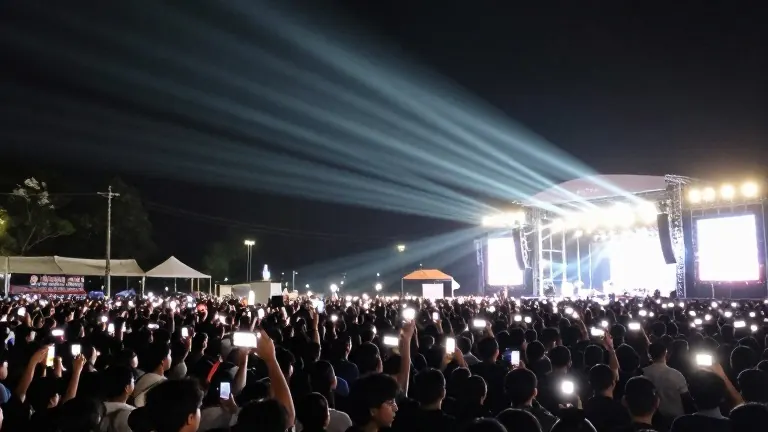
Twenty-five. That is the number of rallies President Donald Trump held in October alone, a dense schedule that has consumed the past month of his final push before the November 3 midterm elections. The events were concentrated in red states where Republican candidates are facing stiff opposition, serving as a high-energy backdrop for a political season that is rapidly closing.
The pace of these events has defined the late stage of the 2026 cycle. For the past month, Trump has traveled continuously, appearing in states like South Carolina, North Carolina, Texas, and Florida. His visits often feature long speeches and aerial flyovers, such as the two-hour address in Greenville, N.C., where an Air Force One jet passed overhead. The itinerary was designed to support Senate candidates like Darline Graham in South Carolina and Michael Whatley in North Carolina, both personally selected by the president.
The schedule, however, has shown signs of strain. On Thursday, the Republican National Committee announced that Trump would cancel two weekend rallies planned for Iowa and Kansas. The party said he would hold a series of tele-rallies instead to reach supporters more efficiently. Less than 24 hours later, the plan reversed. A source familiar with the change, who was not authorized to speak on the record, confirmed that the in-person rallies were back on the calendar. Both are now scheduled for Sunday, with the president holding back-to-back stops in Kansas and Iowa.
The content of these final rallies blends long-time slogans with new improvisations. Trump frequently repeats his praise for tariffs, calling the term his favorite word. He has also leaned into a new bit about Ohio Senator Jon Husted, joking that he studied the candidate's physique. Despite evidence to the contrary, Trump claimed this line helped Husted gain 12 points in the polls. In Texas, he applied the same visual critique to Senate candidate Ken Paxton, asking if his body would qualify for the treatment.
For some attendees, the rallies feel like a farewell tour. Blake Marnell, a San Diego resident known for wearing a suit with brick patterns, took the entire month of October off work to attend as many events as possible. He described the experience as similar to a cruise, preferring political rallies to other leisure activities. In Greenville, N.C., Cindy New, who had never seen Trump live until this year, said she wanted to catch him before his term ends. She viewed the event as a one-time opportunity to see the president in person.
The crowds remain enthusiastic, but the president has acknowledged the physical toll of the schedule. At a recent Oval Office event, he noted that standing and speaking for two hours is not easy. He cited the size of the crowds and the visible affection in the rooms as reasons to keep going. In Corpus Christi, Tex., he told supporters that 11 years of political activity had created a unique moment that might not happen again.
The final stretch of the campaign has also brought moments of weariness. In Daytona Beach, Fla., Trump admitted that 28 days of consecutive campaigning was exhausting. He joked that his voice was operating at 49.2 percent capacity. As the party prepares for the election, the schedule shifts from in-person spectacles to a mix of live events and remote appearances, marking the end of an intense month of campaigning.
The next major appearances are set for Sunday in Kansas and Iowa. These stops will conclude the series of in-person rallies, with the remainder of the campaign handled through tele-rallies in the days leading up to the vote. The focus now shifts to the final vote counting in key Senate races across the South and Midwest.
Source: WWNO