Midterm Vote Tests Trump Approval Slump
Polls show Trump’s approval has fallen to 37%, a level historically associated with heavy losses for the president’s party.
By Lucy Lefebvre ·
President Trump faces a sharp drop in support as Americans cast ballots on Tuesday, a decline that puts his party’s control of Congress at risk. Recent polling data shows his average approval rating has fallen to 37%, down from 52% early in 2025. This figure has crossed below the 40% threshold that experts identify as a warning sign for midterm election results.
The drop in approval follows a campaign focused on economic concerns. Voters cite high inflation and rising gas prices as primary reasons for their dissatisfaction. Although Trump promised to lower costs and tame inflation, public perception of everyday expenses remains negative. This economic frustration has driven a shift in sentiment among voters in swing states and red states where Trump previously won by double-digit margins.
Trump’s campaign strategy for the final weekend reflected this concern. He traveled to Iowa and Kansas for in-person rallies, aiming to protect Republican Senate races in states where Democrats have historically struggled. He also held remote events in 19 other states. This approach contrasts with his first term, when he adopted a more conventional executive style. In his second term, he has positioned himself as the central figure of the election, urging supporters to treat the midterms as a referendum on his leadership.
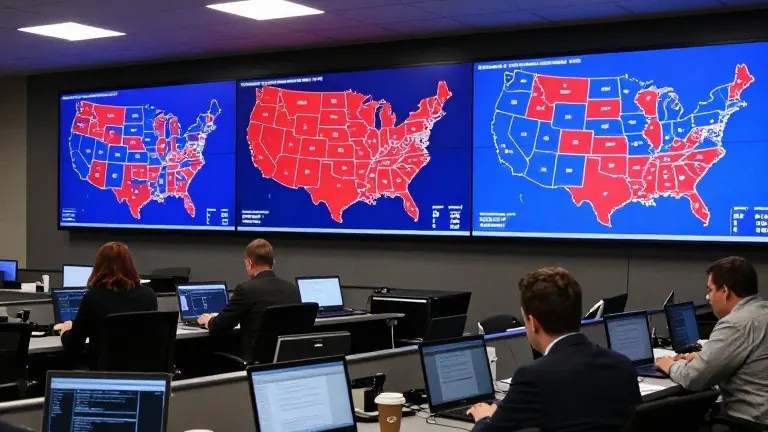
Democrats are preparing to take control of at least one chamber of Congress. If they win the House, their majority will be modest compared to historical standards. A narrow victory in the Senate would empower independent members on both sides of the aisle. The party faces internal challenges, including divisions between moderate consensus builders and progressive nominees. Some Democratic candidates aligned with the Democratic Socialists of America have drawn attention from Republicans, even in districts where those candidates lost primary elections.
Political demographer Ruy Teixeira, who now works at the American Enterprise Institute, has outlined questions for Democrats to answer if they regain power. His list includes whether the party will prioritize working-class economic interests over its recent focus on social and environmental policy. These internal debates occur as the party unites around issues such as grocery prices and opposition to Trump’s foreign policy decisions, including the war in Iran.
The election also tests public confidence in the voting system itself. Nonpartisan experts note that improvements in voting technology and administration since the Help America Vote Act have strengthened security. However, Trump has repeatedly questioned the integrity of the process, labeling polls and news reports as fake. This skepticism sets the stage for potential disputes over results in the days following the vote.
Source: WBHM