Trump's $5,000 Dividend: A Vote-Buying Gamble That Needs Congress
The president pledged a trillion-dollar payout if Republicans hold Congress, but Speaker Johnson says the money still requires legislative approval and experts question the source.
By Noor Rossi ·
President Donald Trump made a bold financial pledge to American voters at the Republican Midterm Convention in Dallas, promising a $5,000 check to every adult citizen if his party retains control of both the House and Senate. The move, branded as the Trump Dividend, has sparked immediate debate over whether the offer serves as a strategic attempt to secure votes or a risky fiscal maneuver that strains an already heavy national deficit.
During a nearly two-hour speech, Trump told the crowd that if Republicans win both chambers, the country would share in its economic success. He compared the proposal to successful companies distributing cash to shareholders and cited the administration's recent payment of $1,776 to military service members as a precedent. The promise was explicit: every adult citizen in the United States would receive the payment, a condition that excludes U.S. citizens living abroad.
The scale of the commitment is massive. According to the U.S. Census Bureau, there are approximately 245 million adult citizens in the country. Providing a $5,000 check to each of them would cost the federal government roughly $1.2 trillion. This figure would significantly increase the nation's annual budget deficit, which is already nearing $1.8 trillion, and could exacerbate existing concerns about inflation and rising interest rates.
Despite the president's confidence, the legal and procedural hurdles are substantial. House Speaker Mike Johnson, a Republican from Louisiana, stated on Sunday that the payments would require congressional approval. Johnson, who is navigating one of the smallest House majorities in history, said he would work to implement the proposal. He described the idea as creative but emphasized that Congress must act to make it happen.
Trump initially suggested that legislative authorization might not be necessary, claiming the government was taking in sufficient revenue to cover the cost. However, he did not specify how the administration would spend more than $1 trillion without the explicit consent of lawmakers. This discrepancy has raised questions about the practicality of the plan, especially since the White House has not released a formal mechanism for distributing the checks.
Vice President JD Vance indicated that tariff revenue could be a primary funding source for the dividend. However, fiscal experts note that the Supreme Court recently struck down many of the administration's tariff proposals, limiting the available revenue. Erica York, a senior economist at the Tax Foundation, warned that the cost of the checks would consume almost all the revenue projected from the new tariffs over a decade, suggesting the math does not easily support the promise.
The proposal has drawn bipartisan criticism. Some Republicans, such as Texas Congressman Chip Roy, have questioned the idea of creating dependency through government handouts. Democrats have focused on the cost of living, noting that while the promise offers a one-time boost, it does not address the persistent inflation that continues to affect households. The Associated Press reports that most Americans blame the president for high prices, a sentiment that could influence voting behavior on Tuesday.
PolitiFact has rated the certainty of the largest payment as far from guaranteed. The fact-checkers noted that the White House press release provided no details on how Americans would receive the money or when the payments would begin. Senator Bernie Moreno of Ohio plans to introduce legislation to fund the proposal immediately after the election, but analysts say the bill is unlikely to achieve the 60-vote supermajority needed in the Senate to overcome potential procedural obstacles.
The timing of the announcement, weeks before the midterm election, has led some observers to view the dividend as a campaign strategy. Election law experts, including Rick Hasen of UCLA, have noted that such promises are generally protected by the First Amendment as campaign rhetoric. However, the historical precedent of failed payout promises, such as the earlier $2,000 tariff dividend that never materialized, may temper voter enthusiasm for the new offer.
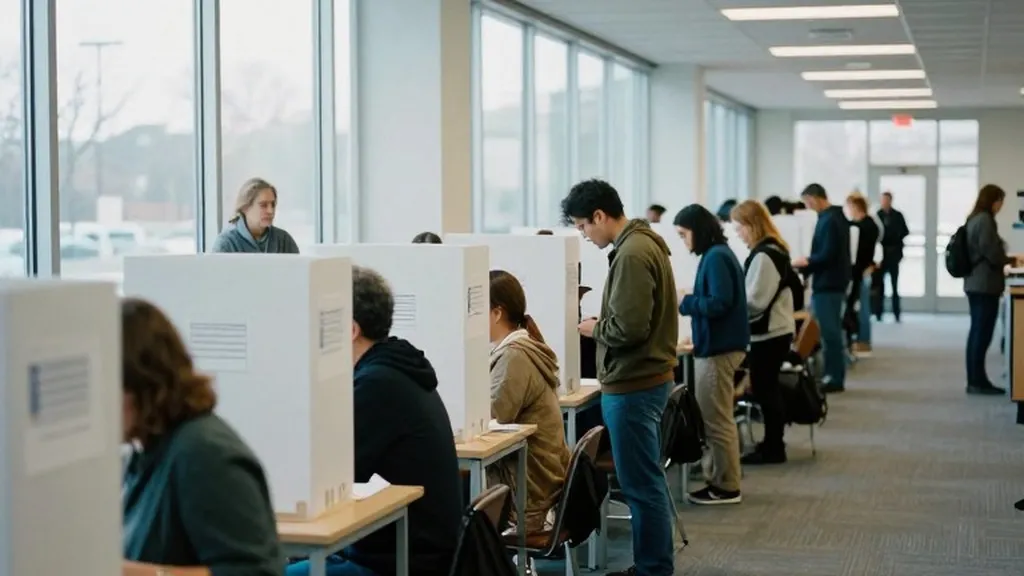
As voters head to the polls, the decision hinges on who controls Congress for the remainder of the president's term. Democrats need a net gain of three House seats and four Senate seats to reclaim a majority, which would likely lead to increased oversight and investigations. Republicans, bracing for potential losses, are counting on the dividend and other economic messages to energize their base and hold onto their narrow margins in both chambers.
The election results will determine whether the Trump Dividend moves from a campaign promise to a legislative priority. With polls open and millions of ballots cast, the outcome remains uncertain. The final two years of this presidential term will be shaped by the party that controls the levers of legislative power, making this midterm election a critical referendum on the administration's economic direction and its ability to deliver on high-stakes financial pledges.